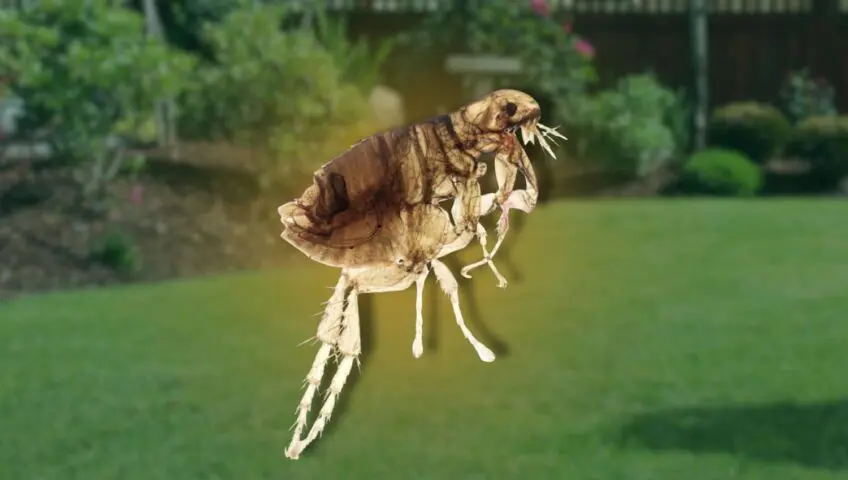
Grass treatment for fleas plays a critical role in controlling fleas and reducing overall pest pressure around a property. Here’s what to know for your home and lawn.
When homeowners deal with fleas, the focus is usually indoors. Pets are treated, carpets are cleaned, and floors are vacuumed repeatedly. For many Florida homes, those steps bring short-term relief but fail to solve the problem for good.
That is because flea infestations rarely start indoors. In warm, humid areas like Brevard County, the yard is often the primary source of flea activity.
Grass, shaded soil, and moisture create ideal conditions for fleas to live, reproduce, and spread. If the outdoor environment is not addressed, fleas can continue to re-enter the home on pets, shoes, and clothing.
Why Fleas Thrive in Florida Yards
Florida’s climate supports flea populations for much of the year. Warm temperatures, frequent rainfall, and shaded landscaping allow fleas to survive and reproduce outdoors far longer than in cooler regions.
Fleas are commonly found in:
- Grass and turf
- Shaded soil and leaf litter
- Areas where pets rest or travel
- Moist zones near foundations, fences, and landscaping
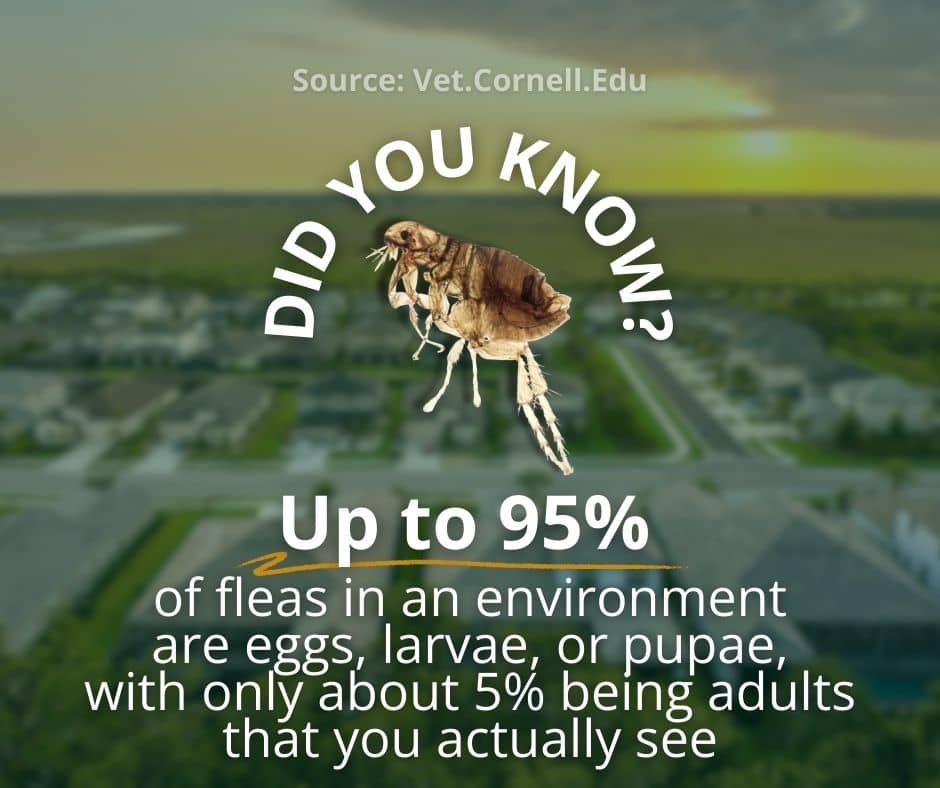
Veterinary and pest research consistently shows that most of a flea population lives in the environment, not on pets.
Adult fleas are only a small portion of the overall population. Eggs, larvae, and pupae develop in grass, soil, and organic debris, often out of sight. This is why flea problems often persist even when pets are treated regularly.
What Grass Treatment for Fleas is Designed to Do
Grass treatments are not simply about killing insects on contact. Their primary goal is to reduce flea populations at multiple stages while making the yard less supportive of reinfestation.
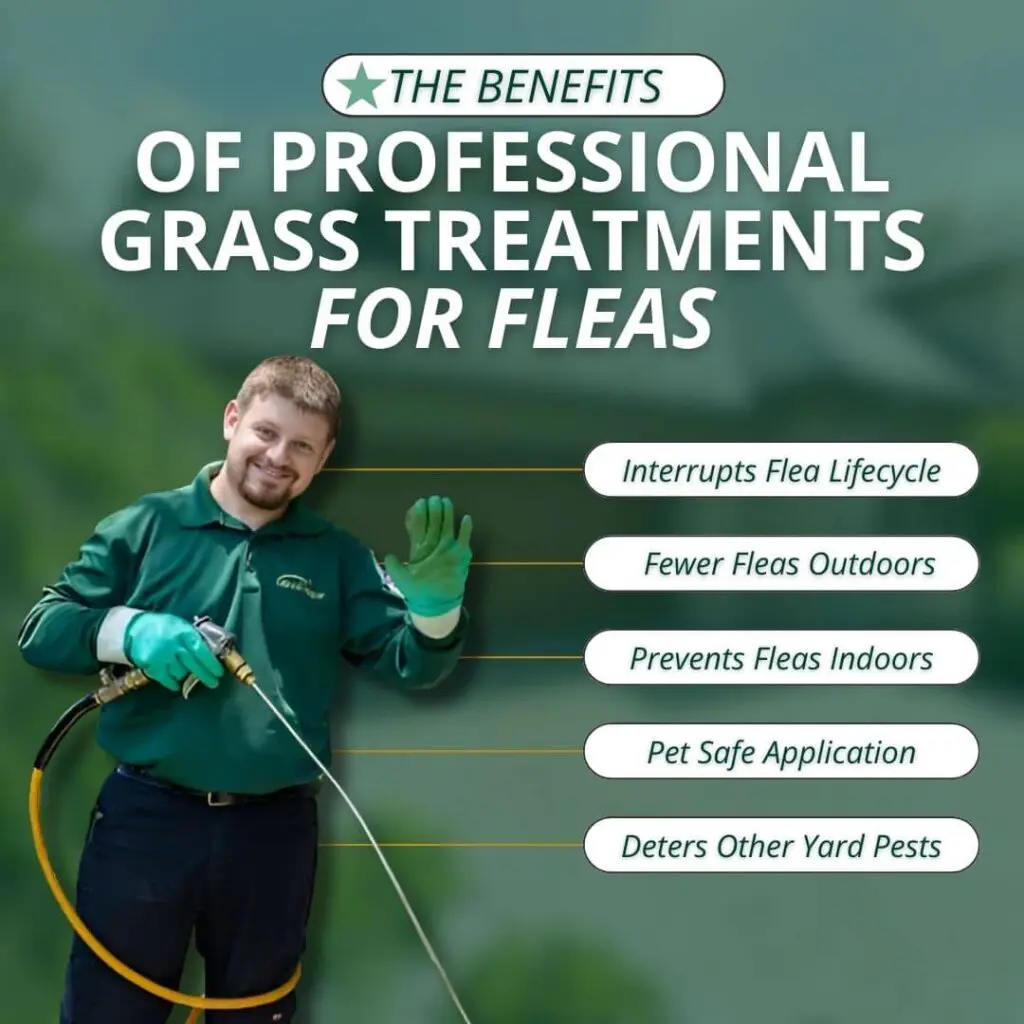
A professional grass and lawn treatment is designed to:
- Reduce adult flea populations in turf and soil
- Target larvae and eggs developing in the environment
- Interrupt the flea life cycle
- Reduce moisture and shelter that support pests
Because fleas rely on outdoor environments to reproduce, treating the yard directly addresses the source of the problem rather than just the symptoms inside the home.
How Flea Life Cycles Shape Effective Yard Treatments
Fleas go through four stages of development:
- Egg
- Larva
- Pupa
- Adult
Only adult fleas live on pets. Eggs fall off into the yard, larvae develop in soil and organic material, and pupae can remain dormant for extended periods.
In warm climates, this cycle can move quickly. Under favorable conditions, flea populations can rebound within weeks if the environment is not treated. This is one reason recurring flea problems are so common in Florida.
Grass treatments are formulated to address multiple stages of this cycle, which helps reduce the number of new adult fleas emerging over time.
What a Professional Grass Treatment Typically Covers
Grass treatments are applied strategically, not randomly. Professionals focus on areas where fleas and other pests are most likely to live and develop.
These areas often include:
- Lawns and turf
- Shaded areas beneath trees and shrubs
- Soil where pets spend time
- Fence lines and landscape borders
- Perimeter zones near the foundation
Treatments are designed to reach the soil surface where flea larvae are commonly found. This targeted approach improves effectiveness while limiting unnecessary exposure.
Grass Treatments Compared to Indoor Flea Treatments
Indoor flea treatments are important, especially when pets are affected. However, they address only part of the problem.
|
Treatment Area |
Primary Focus |
|
Indoor treatments |
Adult fleas inside the home |
|
Grass treatments | Fleas that develop in outdoor environments |
Without treating the yard, fleas can continue to re-enter the home repeatedly. Grass treatments help break this cycle by reducing outdoor populations before they reach pets or indoor spaces.
Why Flea Problems Often Return Without Yard Treatment
Many homeowners are frustrated by flea problems that seem to disappear and then return weeks later. This cycle usually happens because the yard remains untreated.
Recurring flea issues often occur when:
- Flea eggs remain in soil and grass
- Moisture and shade protect developing fleas
- Pets move between indoor and outdoor areas
- Florida weather allows continuous reproduction
Studies referenced by veterinary and pest management organizations show that long-term flea control requires addressing both pets and their environment. Treating only one side of the equation rarely produces lasting results.
How Grass Treatments Also Reduce Other Yard Pests
Fleas are rarely the only pests living in Florida lawns. Many insects thrive in the same warm, moist conditions.
Grass treatments may also help manage:
- Ticks
- Fire ants
- Chinch bugs
- Sod webworms
- Grubs
- Mole crickets
Reducing overall pest pressure helps protect turf health and limits the number of insects migrating closer to the home.
The Role of Moisture, Shade, and Lawn Health
Environmental conditions strongly influence pest activity. Excess moisture, dense shade, and thick thatch all provide shelter and breeding opportunities for insects.
Unhealthy lawns may:
- Retain moisture longer than needed
- Accumulate organic debris that supports larvae
- Reduce the effectiveness of surface treatments
Combining grass treatments with proper lawn care helps improve results. Drainage management, appropriate mowing height, and routine maintenance all make the yard less inviting to pests.
How Often Are Grass Treatments Needed in Florida?
There is no single treatment schedule that works for every property. Treatment frequency depends on:
- Lawn size and layout
- Shade and moisture levels
- Pet activity
- Seasonal weather patterns
In Brevard County, flea activity rarely stops entirely. Even during cooler months, fleas can survive in sheltered areas. Ongoing or seasonal treatments help prevent populations from rebuilding between outbreaks.
Safety Considerations for Pets and Families
Safety is a common concern for homeowners considering yard treatments.
Professional applications follow established guidelines. Homeowners are typically advised to:
- Keep pets and people off treated areas until dry
- Follow post-treatment instructions
- Avoid watering until recommended
When applied properly, treatments are designed to be effective while minimizing risk.
Common Misunderstandings About Yard Pest Control
Several misconceptions often limit the effectiveness of flea control efforts.
Common misunderstandings include:
- One treatment will eliminate fleas permanently
- Fleas only live on pets
- Indoor treatments alone are sufficient
- Lawn treatments only affect visible insects
Grass treatments work best as part of a broader approach that considers pets, indoor spaces, and outdoor environments together.
Why Professional Grass Treatment for Fleas Makes a Difference
Store-bought products may offer temporary relief, but they often lack the coverage and formulation needed for Florida conditions.
Professional services provide:
- Targeted treatment based on property conditions
- Products designed for outdoor pest environments
- Knowledge of local pest behavior
- Integration with lawn care practices
This approach improves consistency and reduces repeated infestations over time.
Related Questions
How does lawn health affect pest problems around a home?
Healthy lawns with proper drainage and maintenance are less likely to support heavy pest populations. Poor turf conditions often create shelter and moisture that attract insects.
Can lawn pests impact areas beyond the yard itself?
Yes. Many pests move between outdoor and indoor environments. Reducing pest activity in the yard lowers the chances of insects entering the home.
Why do some yards have more pest issues than others?
Shade, moisture, landscaping design, and pet activity all influence pest behavior. Two neighboring properties can experience very different pest pressures based on these factors.
Are flea problems usually connected to other pest activity?
Often, yes. Fleas commonly appear alongside ticks, ants, or turf-damaging insects that thrive in similar conditions.
When to Call Slug-A-Bug About Grass Treatment for Fleas
Some level of insect activity is normal in Florida yards, especially during warmer months. Ongoing flea problems or repeated reinfestations, however, usually point to an issue in the outdoor environment that requires more than basic maintenance.
A professional lawn and pest service becomes valuable when flea activity is no longer isolated or easy to manage with indoor steps alone.
It may be time to call for help when:
- Fleas return shortly after pets or indoor areas are treated
- Pets consistently pick up fleas after being outside
- Flea activity is worse in shaded, damp, or grassy areas
- Multiple yard pests are present at the same time
- Yard conditions, such as heavy shade or moisture, are difficult to correct on your own
In these situations, professional treatments help identify where pests are developing and apply targeted solutions that address the yard as a system rather than reacting to symptoms.

Conclusion
Grass treatments play an essential role in managing fleas and other yard pests in Florida. By targeting the environment where pests live and develop, these treatments help reduce recurring infestations and improve overall lawn health.
For Brevard County homeowners, understanding how grass treatments work makes it easier to protect pets, homes, and outdoor spaces from ongoing pest pressure.
Slug-A-Bug helps homeowners address yard pests with informed, targeted solutions designed for Florida conditions.
