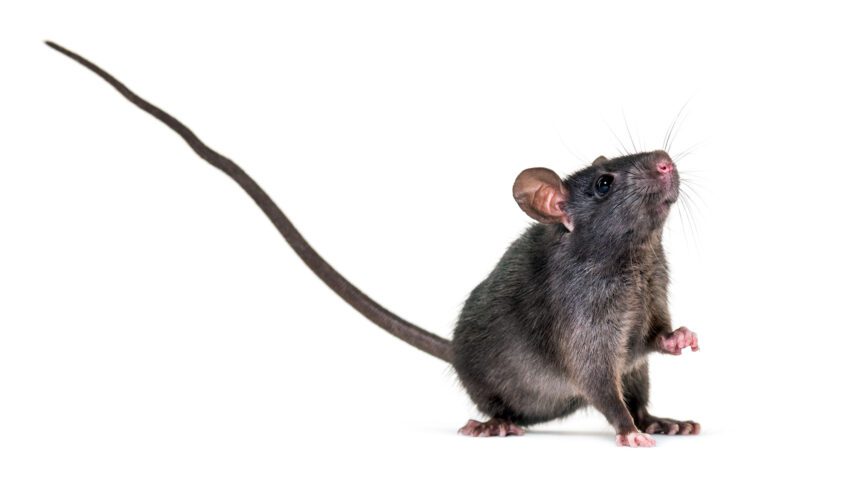
Are rats dangerous? They’re dangerous enough to take seriously, and not in the ways most articles online suggest. Rats in a Florida home spread disease through their droppings and urine far more often than through bites; they damage wiring and attic insulation, and in Brevard County they are almost always roof rats living above your head rather than Norway rats burrowing below.
Slug-A-Bug has worked in Brevard homes since 1982, and the risks we actually find are specific. Here is what rats genuinely do to a house and the people in it, and what the internet gets wrong.
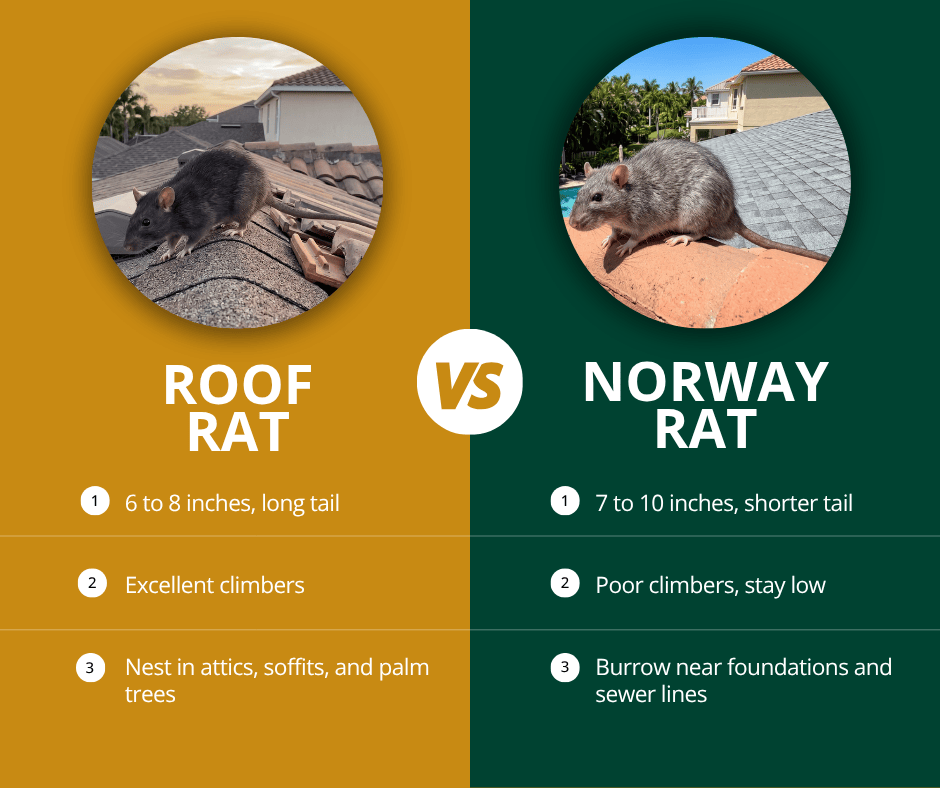
The Rat You Have in Brevard Is a Roof Rat
Florida’s climate, citrus, palms, and attic-and-soffit construction all favor one species.
| Feature | Roof rat | Norway rat |
|---|---|---|
| Size | 6 to 8 inches, sleek | 7 to 10 inches, stocky |
| Tail | Longer than the body | Shorter than the body |
| Face | Pointed nose, large ears and eyes | Blunt snout, small ears |
| Climbing | Excellent | Poor |
| Where it nests | Attics, soffits, palm fronds, trees, utility lines | Burrows near foundations, sewers, crawl spaces |
| Common here? | Very common | Less Common |
This matters more than it sounds. A roof rat problem is an overhead problem. You hear it in the ceiling at night, you find droppings in the attic insulation, and the entry point is usually a gap in the soffit or a branch touching the roof line, not a hole in the baseboard.
Most national pest content focuses on Norway rats. If the advice you are reading focuses on ground-level burrows and foundation gaps, it was not written for your Florida house.
How Rats Actually Make People Sick
The CDC describes two paths. Rodents spread disease directly through contact with droppings, urine, or saliva, including breathing air or eating food contaminated with rodent waste, and through bites. They also spread disease indirectly through fleas, ticks, and mites that feed on them.
The direct path matters far more in a typical infestation. Nobody in a Brevard attic is getting bitten. They are living below a nest.
Leptospirosis
Leptospirosis spreads through the urine of infected animals, and rodents are a known carrier. People get it through contact with water or soil containing that urine.
This is the one Florida homeowners should pay attention to after storms, because floodwater moves contaminated soil and standing water around properties. Untreated, it can cause kidney damage, meningitis, liver failure, and worse.
Other Common Ones
- Salmonellosis comes from food or surfaces contaminated by droppings. It is the mundane one and the most common.
- Rat-bite fever comes from bites, scratches, or contact with saliva or urine. The bacteria live naturally in rodents. You will see fatality percentages quoted around the web for this. CDC does not publish one, so treat those figures with suspicion.
- Fleas and mites travel with rats and do not stay on them. That is how an infestation becomes a second pest problem.
What About Hantavirus
Here is where most of the internet gets it wrong, including several national pest control companies.
Hantavirus appears on nearly every “diseases rats carry” list. In the United States, the hantavirus that causes hantavirus pulmonary syndrome is spread primarily by the deer mouse, not by roof rats or Norway rats. Deer mice, white-footed mice, rice rats, and cotton rats are the US reservoirs.
Rats are not a meaningful US hantavirus source. The rat-associated hantavirus, Seoul virus, is rare here.
We mention this because accuracy matters when you are deciding how worried to be. Rats in your attic are a real health concern for real reasons. Are rats dangerous? Indirectly, yes. But Hantavirus is not one of the main Florida home concerns.
The Damage You Do Not See
Health risk gets the headlines. Property damage is what usually costs more.
Rats gnaw constantly because their incisors never stop growing. In an attic, that means:
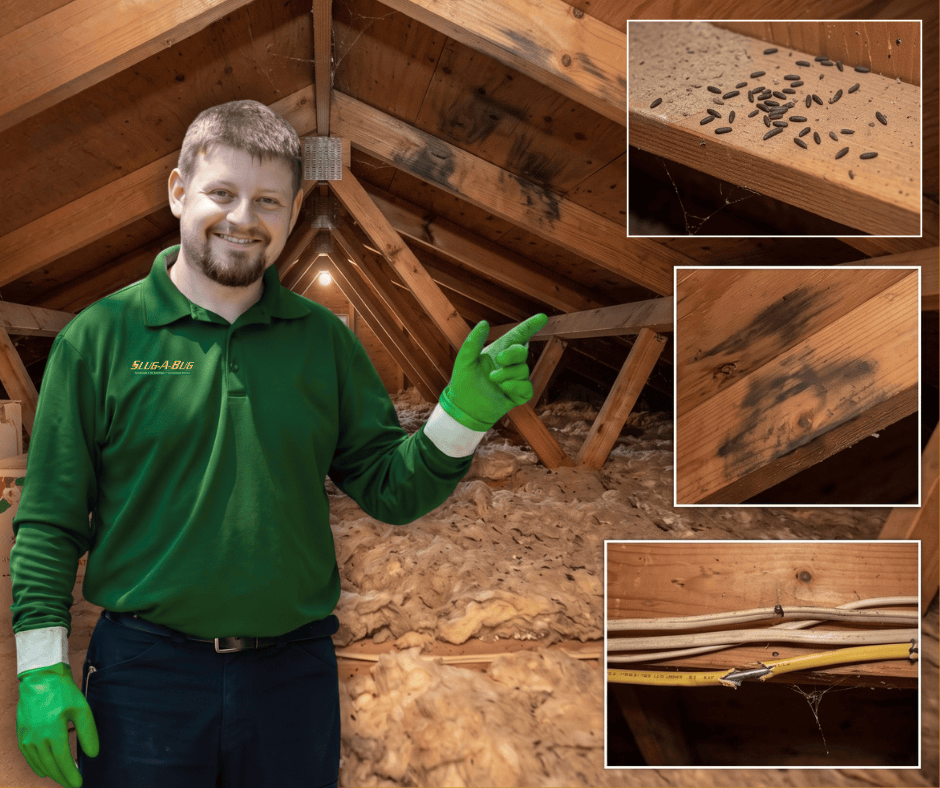
- Electrical wiring stripped of insulation, leaving exposed conductors
- Attic insulation compressed into nesting material and soaked with urine, which destroys its R-value and raises your cooling bill
- HVAC ductwork chewed open, which pulls attic air and contaminated dust into the system and circulates it through the house
- Soffits, vent screens, and rooflines damaged at the entry point, which then lets in the next animal
- Plumbing lines and irrigation damaged in some cases
On the fire question, you will find a widely repeated claim that rodents cause 20 to 25 percent of unexplained house fires. We have looked for the source, and there is not one. Even the industry association that publishes the figure does not cite it, and the NFPA does not attribute a share of home electrical fires to animals.
What is true and verifiable: rats chew wire insulation, exposed conductors are a documented ignition source, and finding gnawed wiring in an attic is a reason to call an electrician. That is enough without the invented statistic.
Are Rats Dangerous or Aggressive Toward People?
But are rats dangerous enough to humans that they will approach or attack you? Not really.
Rats avoid humans. They are most active at night specifically because we are not. Bites happen when a rat is cornered, trapped, handled, or startled in close quarters, and they are uncommon in a normal home infestation.
The realistic risk in a Brevard house is not a rat coming at you. It is months of droppings accumulating in insulation above your bedroom while nobody knows.
What Rats in the Attic Sound and Look Like
Roof rats give themselves away in a few consistent ways.
- Scratching or scurrying in the ceiling or walls, usually after dark
- Droppings in the attic, along beams, or behind appliances, roughly half an inch and pointed at the ends
- Gnaw marks on soffit edges, wire, or stored boxes
- A musky smell that gets stronger over time
- Greasy rub marks along walls and beams where they travel the same route
- Pets fixating on a wall or ceiling
Rats can get through an opening the size of a quarter. Mice need only a dime.
Related Questions to Explore
How Do I Safely Clean Up Rat Droppings?
Do not sweep or vacuum them, which sends particles into the air. CDC guidance is to ventilate the area, wear gloves, spray the droppings with disinfectant or a bleach solution and let them soak, then wipe up with paper towels and bag the waste. Wash your hands afterward.
What Should I Do If a Rat Bites Me?
Wash the wound with soap and water immediately and contact a doctor. Bites can transmit infection, and your tetanus status matters. Do not wait to see whether it looks bad.
Can Rats Make My Pets Sick?
Yes. Dogs can contract leptospirosis, and there is a vaccine your veterinarian can discuss. Pets can also be poisoned secondarily by eating a rodent that consumed bait, which is one reason DIY poison is a poor choice in a home with animals.
Why Do I Hear Them Only at Night?
Rats are nocturnal, and they avoid people. Hearing activity in the ceiling after dark is the single most common way Brevard homeowners discover a roof rat problem.
Do Rats Go Away on Their Own?
No. A Florida attic offers shelter, warmth, and easy access to food and water year-round. Without exclusion work that seals the entry points, the population continues and often grows. Professional intervention is needed to prevent further infestation.
When to Call a Professional
Call as soon as you hear activity in the ceiling, find droppings in the attic, or spot gnaw marks along a soffit. Rats breed quickly, and the difference between a two-week-old problem and a six-month-old problem is usually the difference between sealing a soffit gap and replacing insulation.
Call an electrician separately if you find chewed wiring. That is not a pest control repair.
And skip the DIY poison, particularly if you have pets or small children. Trapping and exclusion solve the problem. Bait often just moves a dying rat somewhere you cannot reach it.
Slug-A-Bug has served Brevard County since 1982 and is QualityPro certified through the National Pest Management Association.

Conclusion
Are rats dangerous? The realistic health risk from rats is droppings and urine in your attic, not bites, and leptospirosis deserves attention after Florida storms.
Hantavirus is on nearly every rat disease list online, and it does not belong there. In the US, it is primarily a deer mouse illness.
In Brevard, you almost certainly have roof rats, which means the problem is overhead and the entry point is usually a soffit or a roof line gap.
Hearing something in the ceiling? Get in touch with Slug-A-Bug
