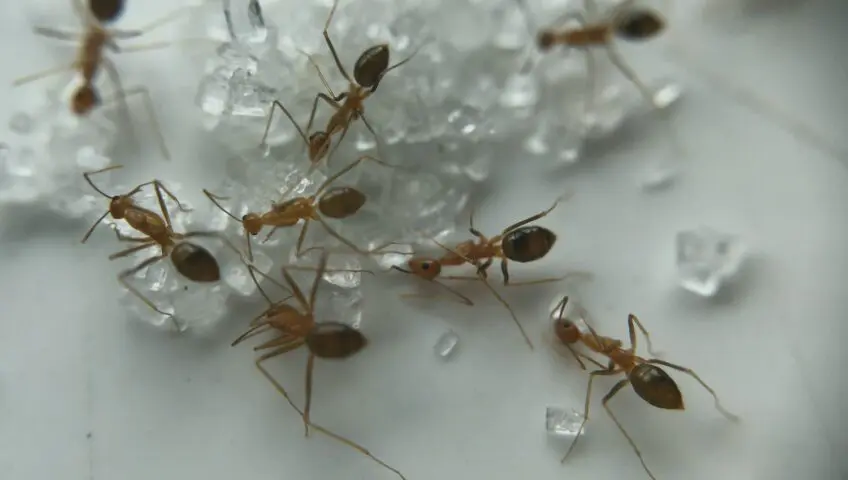
If you’ve spotted a trail of ants inside house areas like your kitchen counter or bathroom floor, you already know the frustrating part: killing the ants you see doesn’t solve the problem. More show up the next day because the real issue isn’t the ants inside your house. It’s the entry points they’re using and the conditions that made your home worth entering in the first place.
In Brevard County, ants are a year-round reality. The warm climate, high humidity, and frequent rain that make the Space Coast such a great place to live are also what make it so hospitable to ant colonies.
Understanding how they get in and what keeps them out is the first step toward actually getting ahead of the problem.
Why Florida Ants Never Really Take a Break
In most parts of the country, cold winters slow ant activity down for months at a time. That doesn’t happen here. Brevard County temperatures rarely drop enough to push ants into dormancy, which means colonies stay active, foraging, and expanding every single month of the year.
Add in the humidity that defines coastal Florida living, and you have near-perfect ant conditions all the time.
Ants need three things to thrive: food, water, and shelter.
A Florida home in any season offers all three within easy reach. The question isn’t really whether ants will look for a way in. It’s whether your home gives them one.
Common Ant Species Getting Into Brevard County Homes
Not all ants are the same problem, and knowing which species you’re dealing with matters for treatment. Here are the ones Brevard County homeowners encounter most often inside the house:
- Ghost Ants: Tiny and pale-bodied with a dark head, ghost ants are drawn to sweets and moisture and nest in wall voids, behind baseboards, and in potted plants. Colonies have multiple queens, which makes them difficult to eliminate without targeting the entire colony.
- White-Footed Ants: More nuisance than danger, but their colonies can grow into the millions. They cover exterior walls and find their way inside through any gap they can reach. Sheer volume is what makes them a persistent problem.
- Carpenter Ants: Large and bicolored with a reddish-orange head and black abdomen. They don’t eat wood as termites do, but they excavate galleries in soft or moisture-damaged wood to build nests. That makes them a structural concern in homes with any existing water damage or wood rot.
- Big-Headed Ants: These invasive ants nest in soil and are common along driveways, sidewalks, and foundations throughout Brevard County. A single colony can have multiple queens and spread across a large underground network, making them hard to control without professional treatment.
- Fire Ants: Primarily an outdoor pest, but fire ants will enter homes through cracks and gaps, especially during heavy rain when ground nests flood. Their sting is painful and can cause serious reactions in sensitive individuals.
Visual idea: Simple identification graphic showing ghost ant, carpenter ant, fire ant, and big-headed ant side by side with key identifying features labeled.
How Ants Are Getting Into Your House
Ants don’t need much space. Some species can squeeze through openings as thin as a credit card edge. These are the most common ways they’re getting in:
|
Entry Point |
Why It’s a Problem in Florida |
|
Foundation cracks |
Shifting soil and moisture cause fissures in concrete and stucco over time |
|
Gaps around doors and windows |
Heat and humidity break down weatherstripping and caulk faster here than in drier climates |
|
Utility penetrations |
Pipe, wire, and cable openings are often not fully sealed and widen as materials expand and contract |
|
Overhanging trees and shrubs |
Branches touching the roofline or walls act as bridges directly into the structure |
|
Mulch against the foundation |
Dense mulch holds moisture and creates ideal nesting conditions right next to the house |
|
Plumbing leaks and condensation |
Moisture from leaks and AC units is one of the strongest ant attractants in a humid climate |
What’s Keeping Them Around Once They’re In?
Getting inside is one thing. Staying requires something worth staying for. These are the most common attractants inside Florida homes:
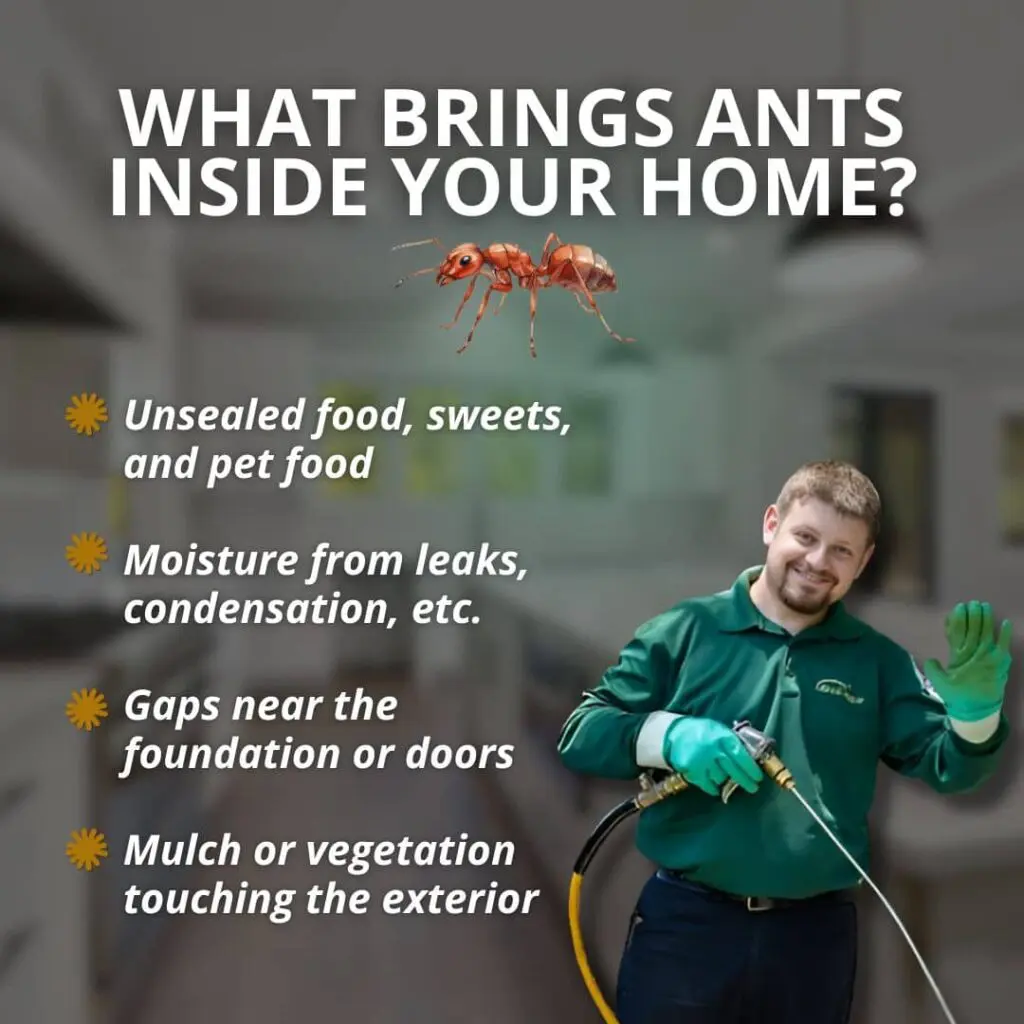
- Unsealed food, especially sweets, grains, and anything with sugar or grease
- Pet food left out in open bowls between feedings
- Standing water near sinks, appliances, or leaky pipes
- Crumbs and food residue on countertops, floors, and inside appliances
- Moisture-damaged wood under sinks, near windows, or around bathroom fixtures
Once a scout ant finds a food or water source, it leaves a pheromone trail back to the colony. That invisible chemical signal is what brings hundreds more ants to the same spot seemingly overnight. Cleaning up the visible ants doesn’t erase the trail.
How to Make Your Home Less Inviting
Keeping ants out of a Florida home takes a combination of sealing entry points, reducing attractants, and managing conditions around the exterior.
Inside:
- Store food in airtight containers, including pet food, between feedings
- Wipe down counters and sweep floors regularly, especially around appliances
- Fix plumbing leaks promptly and address condensation buildup under sinks and around AC units
- Seal gaps around baseboards, pipes, and anywhere utilities enter the home
Outside:
- Pull mulch back several inches from the foundation
- Trim trees and shrubs so they aren’t touching exterior walls or the roofline
- Seal cracks in the foundation and around windows and door frames
- Keep gutters clear and direct drainage away from the foundation
- Store firewood and debris away from the house
These steps reduce pressure significantly, but in Florida’s climate, they work best as part of a consistent pest management routine rather than a one-time fix.

Why DIY Ant Control Falls Short
Over-the-counter sprays are one of the most common first responses to an ant problem and one of the least effective for long-term results. Repellent sprays kill the foragers you can see, but don’t reach the colony. They can also cause the colony to split and spread into new areas of the home, making the problem harder to eliminate.
Bait products work better because worker ants carry poison back to the colony. But selecting the right bait depends on the species, and the wrong bait for the wrong ant gets ignored entirely. Ghost ants, for example, shift between preferring sweets and proteins depending on the season, which is one reason they respond inconsistently to standard products.
For species with multiple queens, like ghost ants and big-headed ants, a single treatment is rarely enough. Every queen needs to be eliminated for the colony to actually be wiped out. That requires knowing where the nests are, how many queens are present, and what treatment approach the species responds to. That’s not something a can of Raid is going to tell you.
Related Questions
Can ants and termites be confused for each other?
Yes, and it happens often, especially during swarm season. Winged ants and termite swarmers look similar, but the differences matter. Termites have a thick, uniform waist and straight antennae.
Ants have a narrow pinched waist and bent antennae. Misidentifying a termite swarm means the real damage keeps going. If you’re not sure what you’re looking at, a professional identification is worth getting before treating.
Do ants attract other pests?
They can. Carpenter ants are often a sign of moisture-damaged wood, which is the same condition that attracts termites and other wood-destroying organisms. An ant problem near the foundation is sometimes an indicator of broader pest pressure worth evaluating.
How does lawn care affect ant activity around a Florida home?
More than most homeowners expect. Overgrown grass, dense ground cover, and unmanaged vegetation near the foundation create nesting and foraging habitat right at your doorstep.
A well-maintained lawn and trimmed perimeter are a meaningful part of keeping ant pressure low.
When to Call Slug-A-Bug
Prevention goes a long way, but some ant problems in Brevard County go beyond what caulk and store-bought bait can handle. Reach out if:
- Ants keep showing up inside despite cleaning up food and sealing obvious gaps
- You’ve tried over-the-counter products, and the problem keeps coming back
- You’ve spotted large bicolored ants near wood structures and are concerned about structural damage
- You’re not sure which species you’re dealing with and want a proper identification before treating
- You want a proactive plan that covers ants alongside other common Florida pests like termites, roaches, and rodents
Slug-A-Bug has been serving Brevard County homeowners for decades. Our team knows the ant species active on the Space Coast, where they nest, and what it takes to eliminate them for good rather than just pushing the problem around. Give us a call and let’s figure out what’s getting in and how to stop it.
Conclusion
Ants are a fact of life in Brevard County, but finding them inside your house doesn’t have to be. Sealing entry points, managing moisture and food sources, keeping up with exterior maintenance, and having a professional pest control plan in place give Florida homeowners the best shot at staying ahead of them year-round.
If ants are already making themselves at home in your home, Slug-A-Bug is ready to help. Contact us today to get started.
