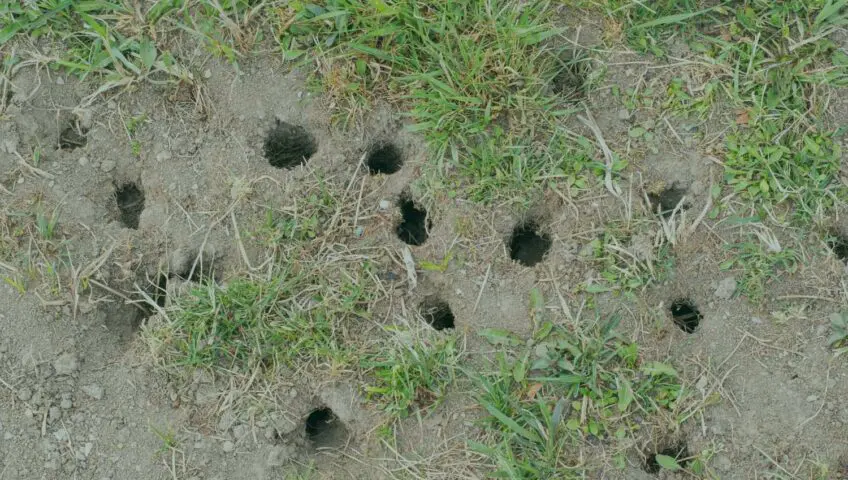
In Florida, holes in the lawn almost always come down to something hunting for food in the soil. Armadillos, grubs, and mole crickets, and the animals that eat them, are behind most of the digging Brevard County homeowners see.
The good news is that the culprit is usually identifiable from the size, shape, and pattern of the holes, and the fix is often the same: get rid of the insects in the soil that everything is digging for.
Here is how to read the holes in your lawn. Plus, what is most likely causing them in Florida, and how to stop the damage for good.
How to Identify What’s Digging Holes in the Lawn
Start with the hole itself. Size, shape, depth, pattern, and what is left around it point straight to the culprit.
| What you see | Likely cause |
|---|---|
| Scattered cone-shaped pits 2 to 6 inches wide, uprooted turf | Armadillo |
| Raised spongy tunnels and small volcano-shaped mounds | Moles or mole crickets |
| Loose dirt mounds with dead patches, no clear opening | Fire ants |
| Pencil-sized holes with small soil castings | Earthworms (harmless) |
| Shallow torn-up patches, flipped sod | Raccoons or skunks after grubs |
| 2-inch hole with a mud chimney near water | Crayfish |
For a deeper reference, UF/IFAS Extension publishes a guide to
identifying the wildlife responsible for yard damage.
The Most Common Culprits in Florida Lawns
Once you have a sense of what the holes look like, the next step is matching them to the specific animals and insects most active in Florida yards. Here are the culprits Brevard County homeowners run into most, starting with the one behind the majority of overnight digging.
Armadillos: Florida’s Number-One Lawn Digger
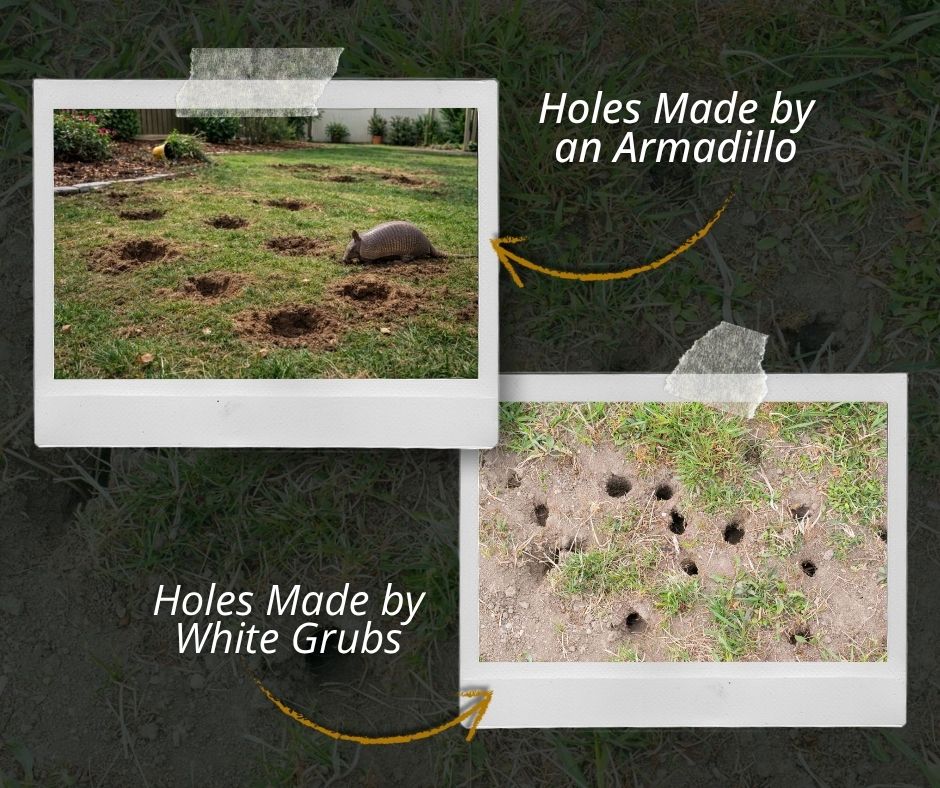
If your Brevard County lawn fills with fresh, cone-shaped holes overnight, an armadillo is the usual suspect. UF/IFAS notes the nine-banded armadillo is an invasive species and one of Florida’s most significant nuisance pests.
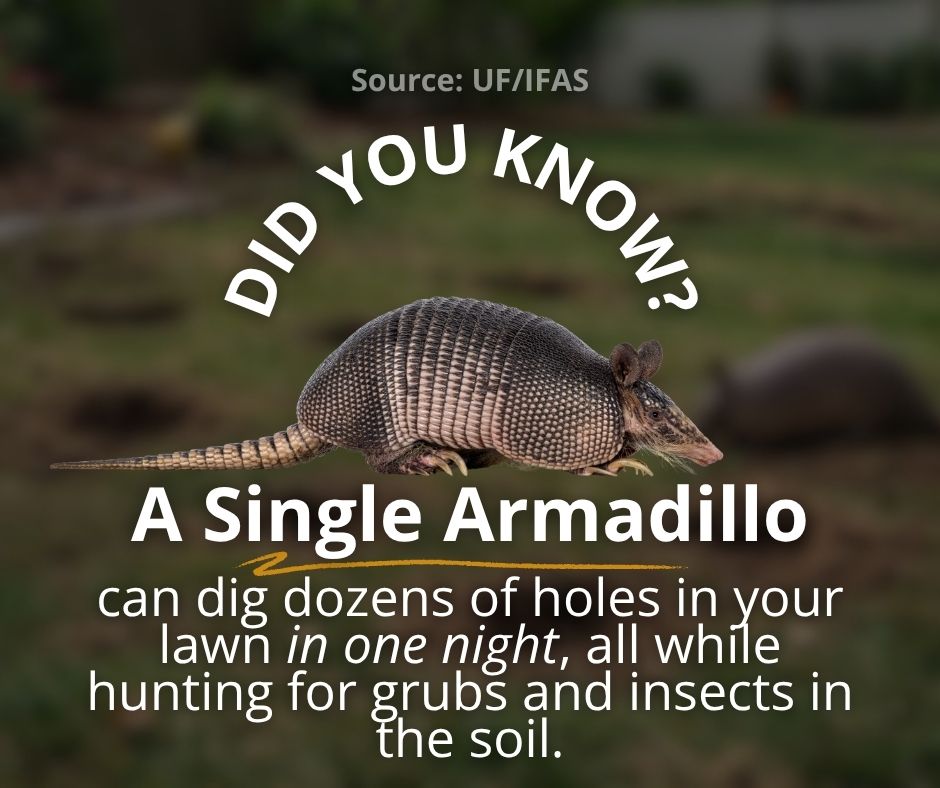
A single armadillo can dig dozens of shallow holes a night. They’re a couple of inches wide and up to six inches deep, rooting for grubs, worms, and other soil insects. Because they prefer moist soil, they concentrate on well-watered lawns, exactly the green turf homeowners work hardest for.
You can usually confirm an armadillo by the pattern. The holes are cone-or-funnel-shaped, scattered without any real order, and often ringed by uprooted grass and flipped-over sod where the animal pushed its snout in.
You will rarely catch the animal in the act, since they feed at night and rest in burrows during the day. Those burrows are a second problem: armadillos dig dens two to three feet deep, and when they tunnel next to a driveway, patio slab, or foundation, the soil loss underneath can lead to cracking and settling over time.
The key insight is that armadillos are not really after your grass. They are after what lives under it. Remove the insects, and you remove the reason they dig. Persistent armadillos usually need wildlife control to be removed safely and within state rules, since Florida regulates how nuisance wildlife can be trapped and relocated.
Grubs and Mole Crickets: The Real Root of the Problem
Most digging traces back to insects in the soil. White grubs (beetle larvae) and mole crickets are two of the biggest turf pests in Florida.
Grubs are white, C-shaped larvae that chew grass roots below the surface, leaving turf that feels spongy underfoot and pulls up like loose carpet because the roots are gone. Mole crickets do their damage differently, tunneling just below the surface at night and pushing up ridges of loosened soil that dry the grass out from the roots up. Both are worst in the warm months, and in Florida that window runs most of the year.
Here is why they matter for holes: grubs and mole crickets are the buffet that draws armadillos, raccoons, and skunks to your lawn in the first place. An animal tearing up your turf is really a sign of an insect problem underneath it. That is also why filling holes or chasing off one armadillo never works for long; another animal simply finds the same food. Control the grubs and mole crickets, and the entire chain of damage usually stops, which is why lawn care treatment is the real fix rather than a cosmetic one.
The signs overlap with other turf problems, so if you are also seeing discoloration alongside the holes, our guides on brown patches on your lawn and a lawn turning yellow in summer can help you tell the difference between insect damage and a watering or disease issue.
Fire Ants and Ground-Nesting Insects
Fire ants build loose, dome-shaped dirt mounds, and open holes in the lawn appear when a mound is disturbed. Unlike other ants, fire ant mounds have no single central opening; the colony moves in and out through the soil, so a kicked or mowed mound suddenly looks like a cluster of holes in the lawn.
Florida’s warm, wet climate is ideal for them, and a colony can throw up new mounds across a lawn within days, especially after rain. They are also a real stinging hazard: disturb a mound and the colony swarms, which is dangerous for children, pets, and anyone with an allergy.
Other ground-nesting insects leave holes too, though far less aggressively. Ground-nesting bees and cicada-killer wasps dig single pencil- to finger-width tunnels in bare, sandy patches during summer, usually leaving a small ring of excavated soil at the opening. These are generally solitary and short-lived, but a lawn full of them signals thin, dry turf worth addressing. When holes in the lawn come with mounds or stinging activity, pest control is the safe way to knock the colony out at the source.
Rodents, Snakes, and Protected Wildlife
Rats and other rodents burrow along foundations and fence lines, and snakes often use existing holes rather than digging their own.
One important Florida note: the gopher tortoise digs a wide, half-moon-shaped burrow and is a state-protected species. It is illegal to harm, harass, or bury a gopher tortoise or its burrow, so if you find one, leave it alone and call a professional.
When It Is Not an Animal at All
Not every hole has a critter behind it. Heavy Florida rains can wash out soil and open erosion holes in the lawn, and Central Florida’s sandy soils and limestone base make settling and small sinkholes a real possibility.
If the ground slopes toward the hole, it appears after storms, or it comes with cracks in nearby concrete, the cause is more likely water or settling than wildlife.
How to Stop Holes in the Lawn
The most effective fix is to remove the food source and make the lawn less inviting. Filling holes in the lawn alone never lasts, because the reason the animals came is still under the grass. Work the problem in this order:
- Treat the soil insects first. Professional grub and mole cricket control removes exactly what armadillos, raccoons, and skunks are digging for. This is the single most effective step, and the one most homeowners skip because the insects are invisible from above.
- Ease off the watering and fertilizing. UF/IFAS notes that reducing both makes soil less attractive to the earthworms and grubs armadillos love, and drier soil is simply harder to dig. See their guidance on
managing nuisance armadillos. - Address active wildlife the legal way. Armadillos and rodents may need exclusion or trapping, and Florida regulates how that is done. A licensed professional handles removal safely and within state rules rather than risking a fine or an injured animal.
- Fill and level holes once the cause is handled. Tamp soil into each hole and reseed or patch, so fresh digging is easy to spot, and you know whether the treatment worked.
- Keep the lawn thick and healthy. Dense, well-rooted turf recovers faster, hides less food, and is less appealing to both insects and the animals that hunt them. A consistent lawn program is your long-term defense.
Done in that order, you are treating the cause instead of the symptom, which is the difference between patching the same spots every week and being finished with it.
Related Questions
What animal digs holes in the lawn at night in Florida?
Most often an armadillo. They are nocturnal and dig dozens of shallow, cone-shaped holes hunting soil insects. Raccoons and skunks also dig at night for grubs, tearing up patches of turf.
How do I know if grubs are causing my lawn holes?
Check the turf. If the grass feels spongy, lifts up like loose carpet, or shows irregular dying patches, and you find white, C-shaped larvae in the top few inches of soil, grubs are likely feeding and drawing diggers.
Are armadillo holes a serious problem?
They can be. Beyond the cosmetic damage, armadillo burrows can undermine driveways, patios, and foundations. Because armadillos are invasive and prolific in Florida, the digging usually continues until both the food source and the animal are addressed.
How do I get rid of armadillos in my yard?
Take away the grubs and insects they eat, cut back on overwatering, and use exclusion or trapping within Florida’s rules. A pest and wildlife professional can treat the soil pests and remove the animal legally and safely.
What is the difference between mole and armadillo damage?
Moles leave raised tunnels and small volcano-shaped mounds; armadillos leave scattered, cone-shaped holes and flipped-up turf. Moles tunnel continuously below the surface, while armadillos dig many separate shallow pits.
When to Call a Professional for Holes in the Lawn
If holes in the lawn keep coming back, the cause is almost always an insect problem you cannot see. Slug-A-Bug has protected Brevard County lawns since 1982, and our team can identify what is digging, treat the grubs and mole crickets feeding the problem, and handle any armadillos or rodents within Florida’s wildlife rules.
Our lawn care, pest control, and wildlife control services work together to stop the damage at the source rather than just fill the holes.
Reach out to schedule a visit, and we will tell you exactly what is tearing up your lawn and how to stop it.

Conclusion
Holes in the lawn are a symptom, and the cause is usually food in the soil. Read the holes to spot the culprit, then go after the root of it:
- Most Florida lawn holes come from armadillos and the grubs and mole crickets they hunt.
- Identify the culprit by the hole’s size, shape, and pattern.
- Treating the soil insects, not just filling holes, is what makes the digging stop.
Tired of patching the same spots? Schedule a free inspection with Slug-A-Bug to get your lawn back.
