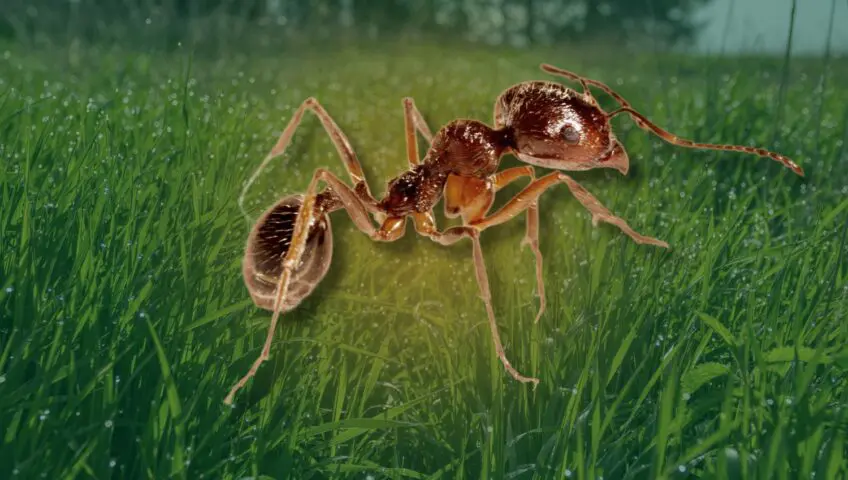
If you’ve spotted a large ant crawling through your Brevard County lawn and thought, “That thing is huge,” you’re not imagining it. Big ants in Florida are common, as the Sunshine State is home to several large species.
While some are just a nuisance, others can damage your lawn, your home’s structure, or deliver a painful bite or sting if you cross their path. The good news is that knowing which species you’re dealing with makes a real difference.
Different ants behave differently, nest in different places, and respond to different treatment strategies. Here’s a practical guide to identifying the big ants most commonly found in Florida lawns and what you can do to keep them from taking over yours.
Why Florida Has So Many Large Ant Species
Florida’s warm climate, high humidity, and long growing season create near-perfect conditions for ants to thrive year-round.
Unlike homeowners further north who get a seasonal break from pest pressure, Brevard County residents deal with active ant populations in January just as much as in July.
Sandy soil, dense landscaping, and the coastal humidity along the Space Coast give large ant species plenty of ideal nesting material.
Add in the fact that many Florida lawns feature St. Augustine grass, mulched beds, and mature trees, and you’ve got a landscape that essentially rolls out the welcome mat for ants of all sizes.
The Big Ants in Florida You’re Most Likely to Find
Several large ant species are active in this part of Florida, and they’re not all the same problem. Here’s a breakdown of the ones Brevard County homeowners encounter most often.
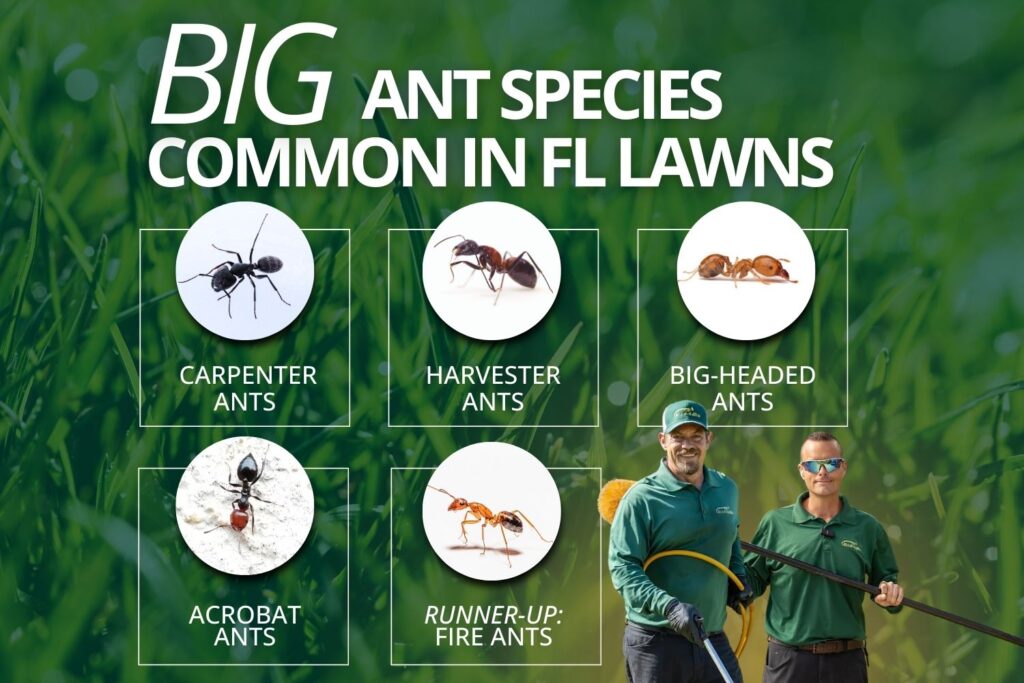
Florida Carpenter Ants
Florida carpenter ants are among the largest ants in the state, with workers ranging from about 5.5 to 10 mm and queens growing even larger. They’re hard to miss: bicolored with a reddish-orange head and thorax and a contrasting black abdomen, they stand out clearly against mulch, wood, and turf.
Unlike termites, Florida carpenter ants do not eat wood. They excavate galleries in soft, moist, or previously damaged wood to build their nests. That distinction matters because the damage they cause is still real, particularly in homes with any existing moisture issues.
Carpenter ants are most active at night and are commonly spotted foraging along tree trunks, fence lines, and the exterior of homes after dark.
- Where to look: Rotting wood, tree cavities, hollow fence posts, wood piles, and moist areas near the home’s foundation.
- What to know: When threatened, Florida carpenter ants bite and can spray formic acid into the wound. Major workers are capable of drawing blood. They aren’t aggressive unprovoked, but disturbing a nest is a different story.
Florida Harvester Ants
Harvester ants are reddish-brown, large, and easy to identify by their nesting habit: they build wide, crater-like mounds in open, sunny areas, and the ground surrounding the mound is usually cleared of all vegetation.
If you’ve got a bare, circular patch in your yard with a large mound at the center, harvester ants are a likely culprit. These ants collect seeds and store them underground, which can disrupt turf in the immediate area of the nest.
They’re generally not aggressive unless the mound is disturbed, but their sting is notably painful and can trigger allergic reactions in sensitive individuals.
- Where to look: Open, sunny areas with sandy soil. Common in lawns, along driveways, and in unmaintained areas at the edge of a yard.
- What to know: Harvester ants play a role in seed dispersal and ecosystem health, but a mound in the middle of your lawn is still a problem, especially with kids or pets in the yard.
Big-Headed Ants
Despite the memorable name, big-headed ants (or Pheidole megacephala) are a medium-sized species, but the major worker caste has an oversized head that makes them stand out. They range from reddish to dark brown, nest in soil, and are commonly found along sidewalks, driveways, patio edges, and in lawn areas.
Big-headed ants don’t bite or sting aggressively, but they build large underground colonies that can extend across significant portions of a yard. They’re sometimes mistaken for fire ants due to their similar coloring, but they lack the aggression and painful sting that fire ants are known for.
- Where to look: Soil near concrete edges, lawn areas with loose sandy soil, and garden beds.
- What to know: Big-headed ant colonies can be surprisingly expansive and difficult to control without professional treatment due to the size and depth of their underground network.
Acrobat Ants
Acrobat ants get their name from the distinctive way they raise their heart-shaped abdomens over their thorax when disturbed, a posture that’s easy to recognize once you know what to look for. Workers are light brown to dark brownish-black and measure around 1/8 of an inch.
They typically nest outdoors in soil, wood, or leaf litter, but they’re also known to move into structures through existing damage, establishing nests inside wall voids or in wood that’s already been excavated by termites or other carpenter ants. If you’re seeing large-ish ants appearing along baseboards or window frames, acrobat ants are worth considering.
- Where to look: Mulched beds, leaf litter, rotting wood, and structural entry points around doors and windows.
- What to know: Acrobat ants can be confused with carpenter ants, but they’re generally smaller and more active during daylight hours.
What about fire ants?
Fire ants are on the smaller side compared to carpenter and harvester ants, but they’re one of the more disruptive species in Florida lawns. Their mounds, aggressive swarming behavior, and painful stings make them a top concern for homeowners and a separate subject worth understanding on their own.
Comparing Brevard County’s Big Ants at a Glance
|
Species |
Appearance |
Nesting Habit |
Threat Level |
|
Florida Carpenter Ant |
Red/orange head, black abdomen, 5.5–10 mm |
Moist or damaged wood, tree cavities |
Moderate: bites, structural damage |
|
Florida Harvester Ant |
Reddish-brown, 5–10 mm, crater mounds |
Open sandy soil, sunny areas |
Moderate: painful sting |
|
Big-Headed Ant |
Reddish-brown, oversized head on major workers |
Soil near concrete, lawn areas |
Low: nuisance, large colonies |
|
Acrobat Ant |
Light to dark brown, heart-shaped abdomen |
Mulch, leaf litter, existing wall voids |
Low-Moderate: nuisance, occasional structural |
What Damage Do Big Ants in Florida Lawns Cause?
Large ant species don’t just look alarming. Some cause real, measurable damage to turf and landscaping.
Harvester ant mounds kill grass in the surrounding area by clearing vegetation and disrupting root systems. Big-headed ant colonies tunnel extensively through soil, which can compromise root structure and leave turf looking thin or patchy.
Carpenter ants nesting in landscaping timbers, tree roots, or moisture-damaged wood near the foundation can accelerate decay and eventually move into the home itself.
Beyond direct damage, large ant colonies can attract secondary pest issues. Carpenter ants, for example, tend to protect aphids and other honeydew-producing insects, which can compound problems in garden beds and on ornamental plants.
How to Prevent Big Ants in Florida Lawns
Prevention is the most effective long-term strategy. A few consistent habits make a significant difference in how attractive your property is to large ant species.
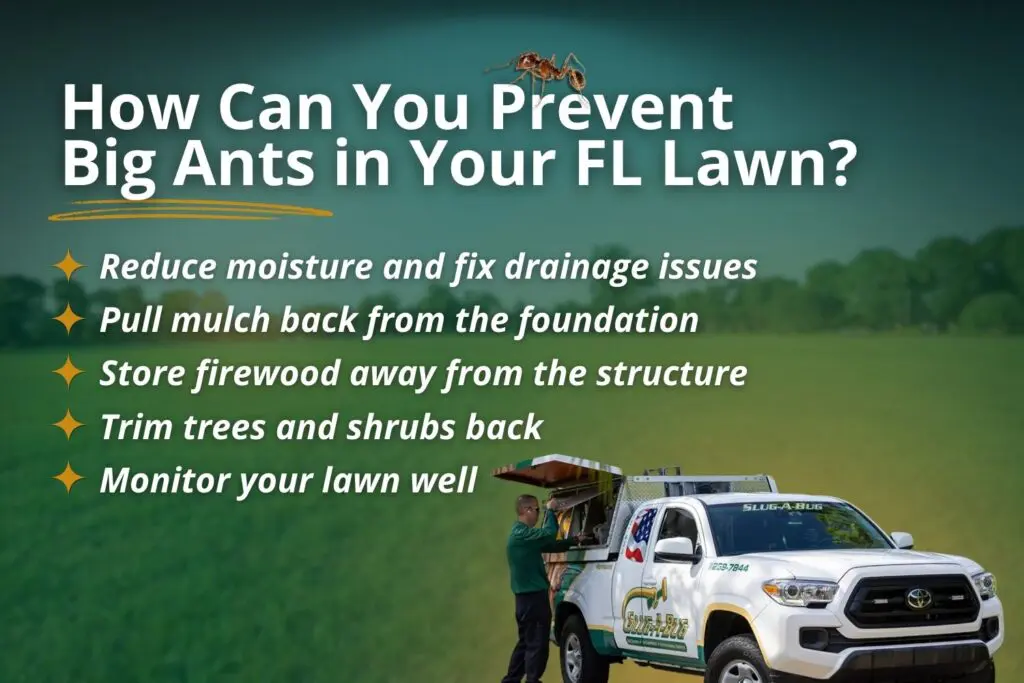
- Reduce moisture near the home: Carpenter ants are drawn to damp, softened wood. Fixing leaks, improving drainage in low-lying lawn areas, and keeping mulch pulled back from the foundation removes a key attractant.
- Manage wood and debris: Firewood stacked against the home, rotting landscape timbers, and piles of organic debris are all prime nesting sites. Store firewood away from the structure and remove decaying wood from the yard.
- Trim trees and shrubs back from the roofline: Carpenter ants use overhanging branches as a bridge to reach the home. Keeping a clear gap between vegetation and the structure reduces access points significantly.
- Don’t over-mulch: Deep mulch beds hold moisture and provide excellent nesting conditions for acrobat ants, big-headed ants, and carpenter ants alike. Keep mulch depth in check and pull it back from the home’s perimeter.
- Monitor your lawn regularly: In Brevard County, ant activity can escalate quickly in warm, wet months. Catching a new colony early, before it establishes and expands, is far easier than addressing a mature population.
Related Questions
What other pests commonly share a lawn with large ant species?
Termites, roaches, and rodents are frequently found in the same conditions that attract big ants, particularly where there’s moisture damage, decaying wood, or dense ground cover. Addressing one pest problem often means taking a closer look at the broader pest environment around the home.
How does lawn care affect ant pressure in Florida yards?
A well-maintained lawn is generally less hospitable to large ant colonies. Overwatered turf, thatch buildup, and neglected landscaping all create conditions that ants, along with other lawn pests, tend to exploit. Consistent lawn care is one of the most effective forms of pest prevention.
Do termites and carpenter ants cause the same kind of damage?
They’re often confused, but the damage looks different up close. Termites consume wood from the inside out, leaving packed galleries filled with soil or frass. Carpenter ants excavate clean, smooth tunnels and don’t eat the wood they remove. Both are serious concerns, and both are worth having a professional evaluate if you suspect activity near the structure.
When to Call a Professional About Big Ants in Florida
Big ants are one of those pest problems that look manageable until they aren’t. A colony that starts in a mulch bed or tree cavity can establish quickly in Brevard County’s climate, and some species, like big-headed ants, build underground networks that are nearly impossible to fully eliminate without targeted professional treatment.
If you’re seeing large ants repeatedly inside your home, finding mounds that keep returning after DIY treatment, or noticing signs of wood damage near your foundation or in your landscaping, it’s time to bring in a professional.
Slug-A-Bug’s pest control team serves Brevard County and the surrounding areas, and proper species identification is always the first step toward the right treatment plan.

Conclusion
Big ants are a reality of Florida lawn life, especially here along the Space Coast, where the climate stays warm and hospitable year-round. Knowing what you’re looking at, whether it’s a Florida carpenter ant near your fence line or a harvester ant mound in the middle of your St. Augustine turf, puts you in a much better position to respond effectively.
Prevention goes a long way: managing moisture, clearing debris, and keeping vegetation trimmed back from the home are habits that pay off consistently. When prevention isn’t enough, professional identification and treatment make the difference between a temporary fix and a lasting one.
Reach out to the Slug-A-Bug team for service and professional guidance today.
