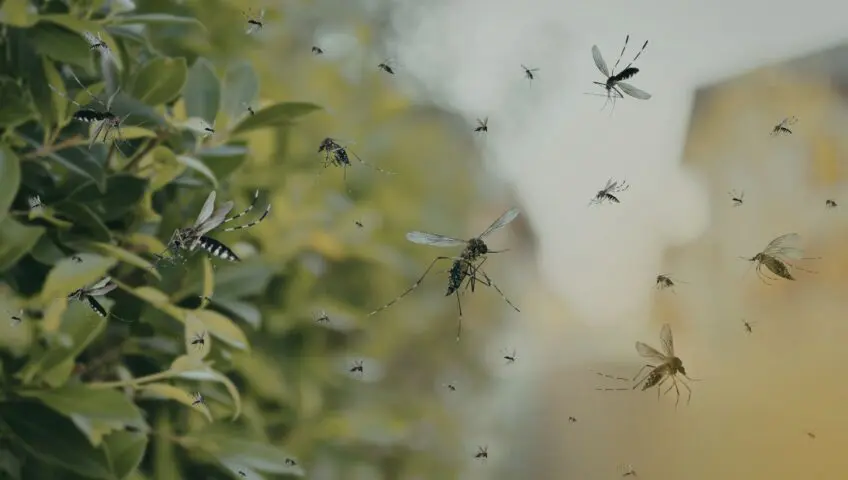
If you live in Florida, mosquito control for yard and patio areas is a year-round problem. Our subtropical climate, frequent rain, and mild winters keep them active long after they’ve disappeared everywhere else.
Slug-A-Bug has been helping Space Coast families take back their yards since 1982, and mosquito control is one of the most common reasons people call.
Here’s what drives the problem and what professional control actually looks like.
Why Mosquito Control in Florida Is Its Own Challenge
Most of the country gets a genuine break from mosquitoes in fall and winter. Florida doesn’t. A few cooler, drier weeks in January might offer some relief, but by March, populations start building again. Then, by the time the rainy season kicks off around May or June, activity is at full intensity.
The local landscape adds to the challenge. Between coastal marshes, retention ponds, lush residential vegetation, and nearly daily summer thunderstorms, standing water collects in dozens of spots around a typical yard. Mosquitoes need far less water than most people realize to breed. A shallow puddle in a low spot in the lawn after an afternoon storm is enough to support hundreds of larvae.
This is why a consistent, professional year-round approach delivers results that one-time or seasonal treatments simply can’t match.
How Mosquitoes Are Using Your Yard Right Now
Mosquitoes have two primary needs in a residential yard: water to breed and vegetation to rest in. Understanding both is key to understanding why effective control has to address the whole yard, not just the spots where you notice bites.
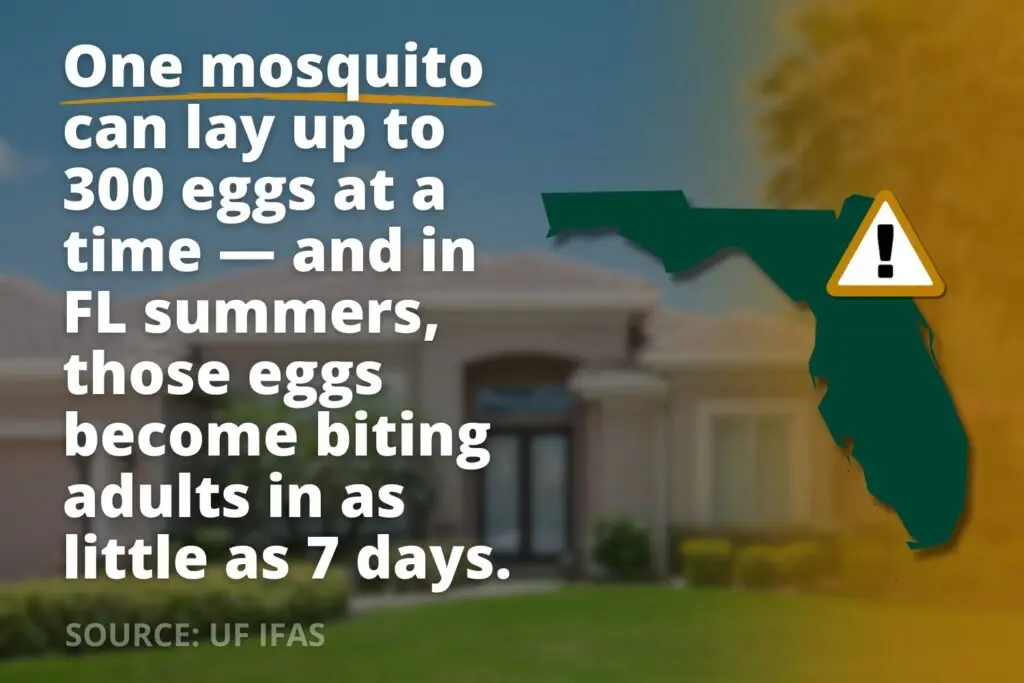
- Breeding: Female mosquitoes can lay up to 300 eggs at a time in a very small amount of standing water. In Florida’s warm climate, those eggs become biting adults in as little as four to 14 days. That cycle repeats continuously through our long warm season.
- Resting: Once hatched, adult mosquitoes seek out shaded, humid vegetation during the heat of the day. They become most active at dawn and dusk, emerging from dense shrubs, ground cover, and overgrown areas around your yard.
Because mosquitoes are using your property in multiple ways at the same time, meaningful control requires treating both where they breed and where they hide. That’s a more complex job than a spray around the patio, and it’s where professional service makes the biggest difference.
What’s Attracting Mosquitoes to Your Property?
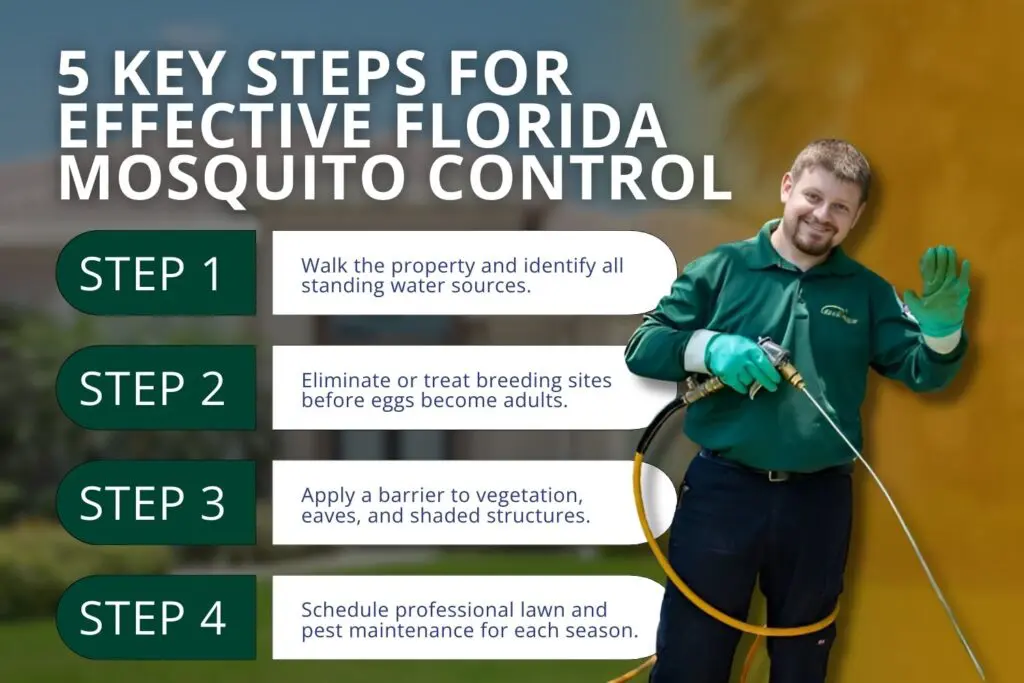
One of the first things a Slug-A-Bug technician does during a mosquito service visit is walk the property with a trained eye. It’s common to find breeding sources that a homeowner hasn’t noticed at all. What looks like an ordinary corner of the yard can be a significant contributor to your mosquito population.
Common attractants include:
- Standing water sources: Clogged gutters, low lawn spots, bird baths, decorative pots, tarps, recycling bins, and outdoor toys that collect rainwater after storms
- Unmaintained water features: Pools that aren’t being properly circulated or treated, neglected fountains, and ornamental ponds without aeration
- Dense vegetation: Overgrown shrubs, thick ground cover, and tall grass near the home’s foundation that create a cool, shaded resting habitat
- Yard debris: Leaf piles, brush stacks, and cluttered areas that stay damp and give mosquitoes cover
Identifying and addressing these conditions is part of what an ongoing Slug-A-Bug mosquito program does at every service visit, not just at the start. Breeding conditions shift with the seasons and rainfall patterns, and staying ahead of that requires consistent, professional attention.
Why Professional Mosquito Control Outperforms DIY
Over-the-counter products applied without professional knowledge of mosquito biology, Florida-specific species, and proper coverage technique rarely deliver lasting results. They can also create resistance issues and unintended effects on beneficial insects when used incorrectly.
Professional mosquito control from Slug-A-Bug works differently for a few key reasons:
- Expertise in local conditions: Brevard County has its own mix of mosquito species, peak activity windows, and landscape conditions. Slug-A-Bug’s technicians know what’s driving the problem in your specific area, whether you’re in Melbourne, Palm Bay, Titusville, Cocoa, or anywhere across the Space Coast.
- Targeted barrier treatments: A residual treatment applied by a trained technician covers the vegetation, fences, eaves, and shaded structures where mosquitoes rest throughout your yard. When done correctly with products appropriate for Florida’s conditions, this significantly reduces adult populations in a way that a standard perimeter spray cannot replicate.
- Breeding site management: Part of every service visit includes identifying water sources that can be addressed or treated to reduce larval development before it contributes to adult populations.
- Consistent scheduled service: Barrier treatments wear down over time, especially after the heavy rain events that roll through Brevard County all summer. Regularly scheduled service keeps protection consistent rather than letting populations rebound between visits.
The Lawn Care Connection
Here’s something many homeowners don’t think about: mosquito control and lawn care are more connected than they seem.
Overgrown or stressed turf holds moisture longer, creates more ground-level cover for resting mosquitoes, and produces the kind of humid microenvironments mosquitoes prefer. A healthy, well-maintained lawn with proper mowing height, good drainage, and appropriate irrigation is genuinely less hospitable to mosquitoes than a neglected one.
Slug-A-Bug’s lawn care program supports mosquito control by keeping turf healthy and well-maintained alongside pest treatment. Pairing these services produces better long-term results than either one delivers on its own, and it means one trusted team is managing the full picture of your yard’s health.
Mosquito Activity by Season in Brevard County
Mosquitoes are present year-round here, but pressure shifts with the seasons. Knowing what to expect helps you stay ahead of it.
|
Season |
Conditions |
What to Expect |
|
Winter (Dec to Feb) |
Cooler and drier |
Lower activity; active on warmer days |
|
Spring (Mar to May) |
Warming temperatures |
Populations building steadily |
|
Summer (Jun to Sep) |
Hot, humid, daily rain |
Peak season; highest pressure of the year |
|
Fall (Oct to Nov) |
Cooling, rain tapering |
Declining but still significant |
Rainy season in Brevard County runs roughly from June through September, and that’s when most homeowners feel the problem most intensely.
Waiting until peak season to start a control program means spending the early months reacting to an already established population. Starting service in early spring puts you ahead of the peak rather than behind it, and that timing difference shows clearly in results.
Related Questions and FAQs
Are mosquitoes the only biting pest I need to worry about in my yard?
Not in Florida. Brevard County yards are also home to fleas, ticks, and biting flies, all of which can affect people and pets spending time outdoors.
Fleas and ticks in particular tend to thrive in the same shaded, humid vegetation that mosquitoes favor, so if one is present, conditions are often right for others.
How does pest control factor into lawn health?
Lawn pest pressure and turf health are closely related. Chinch bugs, sod webworms, and other lawn pests weaken grass and create stressed, patchy turf that holds moisture and creates more favorable conditions for a range of pests, including mosquitoes.
A lawn care and pest control program that addresses both together keeps your yard healthier overall.
What attracts other common pests to Brevard County yards?
Many of the same conditions that drive mosquito pressure, including standing water, overgrown vegetation, yard debris, and stressed turf, are the same factors that attract ants, roaches, rodents, and other common pests.
Keeping your outdoor environment clean and well-maintained reduces the conditions that invite a wide range of pest problems.
When to Call Slug-A-Bug
If mosquitoes are keeping your family inside, making your patio unusable, or showing up in large numbers despite your best efforts, it’s time to call in a professional.
DIY efforts and home remedies have real limits in Florida’s climate, and the longer a population goes unmanaged, the harder it is to bring under control.
Slug-A-Bug has served Brevard County homeowners since 1982 and is the largest independently owned pest control company in the county. The team understands local mosquito behavior, seasonal patterns, and what it actually takes to get results on the Space Coast.
Conclusion
Mosquito control for a Florida yard is not a one-and-done project. It requires addressing the conditions that allow mosquitoes to breed and rest, maintaining consistent professional treatment through the year’s shifting seasons, and pairing pest control with healthy lawn practices that make your yard less attractive to them in the first place.
If you’re ready to actually enjoy your outdoor space again, contact Slug-A-Bug for a pest assessment. The team will walk your property, identify what’s driving your mosquito problem, and put together a plan built for life on the Space Coast.
