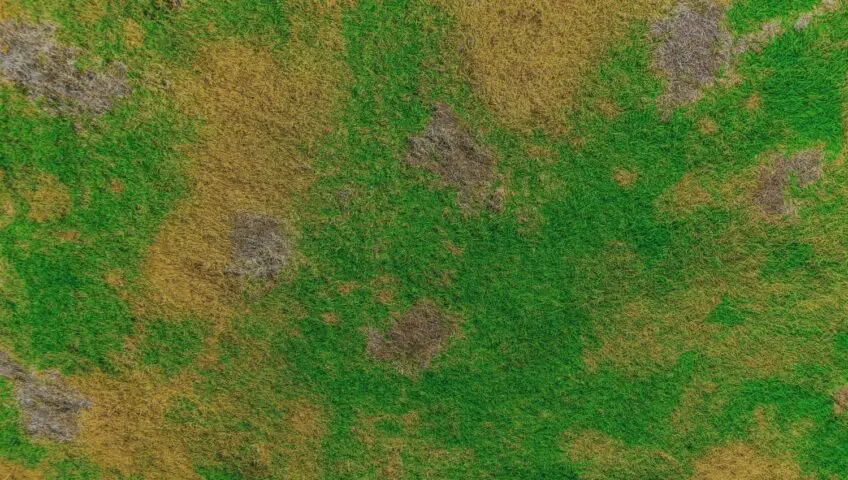
Few things are as frustrating as walking out to the yard on a sunny Brevard County morning and wondering, “Why are there brown patches on my lawn when it was just green yesterday?”
Florida lawns work hard. Between the heat, humidity, sandy soil, and a long list of insects that love our climate, grass here faces challenges that homeowners in other states rarely deal with.
The good news is brown patches almost always have a clear cause, and most are fixable once you know what you are looking at. This guide walks through the most common reasons your Florida lawn is turning brown and what to do next.
What Causes Brown Patches on a Florida Lawn?
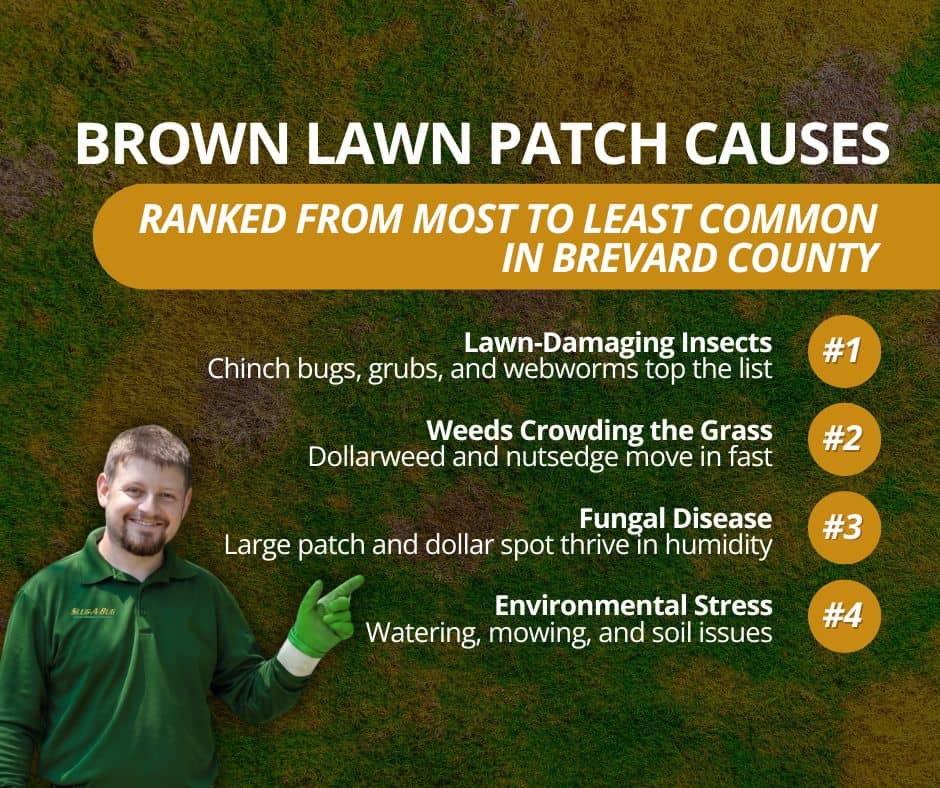
Brown patches are a symptom, not a diagnosis. Four main culprits are usually behind them:
- Lawn-damaging insects
- Weeds are crowding out healthy grass
- Fungal disease causing discoloration
- Environmental stress (water, nutrients, mowing, soil)
In Brevard County, insects and weeds are the most common causes, especially during the warm season when St. Augustine, Bahia, and Zoysia lawns are growing fast, and pests are most active.
Knowing which category you are dealing with changes the treatment plan.
Common Florida Lawn Pests That Cause Brown Patches
Florida’s warm, humid climate is a year-round buffet for lawn pests. Here are the usual suspects behind brown patches on a Brevard County lawn.
Chinch Bugs
Chinch bugs are the number one culprit behind brown, dying patches in Florida St. Augustine lawns. They pierce grass blades and suck out the juices while injecting a toxin that kills the plant.
Signs of chinch bug damage:
- Yellow patches that turn brown and never recover after watering
- Damage starts in sunny spots near driveways, sidewalks, and curbs
- Thousands of tiny black-and-white insects are visible at the soil line
- Worst during hot, dry stretches from April through October
Sod Webworms
Sod webworms feed on grass blades at night and leave behind thin, ragged patches that look chewed down. A heavy infestation can destroy large sections in days.
Signs of sod webworm damage:
- Grass blades look notched, ragged, or chewed
- Thin spots where the lawn looks scalped
- Small moths flutter up when you walk across the lawn
- Green pellet-shaped droppings at the soil line
Grubs
Grubs are beetle larvae that feed on grass roots underground. Damaged areas often feel spongy and can be peeled back like loose carpet.
Signs of grub damage:
- Irregular brown patches that peel up easily
- Increased bird, armadillo, or raccoon digging in the lawn
- Spongy, soft feeling when you walk on the area
- Damage is worst in late summer through fall
Mole Crickets
Mole crickets tunnel through the soil, cutting roots and creating raised, mushy tracks. They do especially bad damage to Bahia grass, common in older Brevard neighborhoods.
Signs of mole cricket damage:
- Raised, loose, tunneled soil across the lawn
- Turf that pulls up easily from disturbed roots
- Damage is worst near streetlights
- Brown streaky patches rather than defined circles
Fire Ants
Fire ants are not grass eaters, but their mounds kill the turf underneath and make yards miserable for kids and pets. Heavy infestations leave small dead circles scattered across the lawn.
Fleas and Ticks
Fleas and ticks do not cause brown patches directly, but heavy activity often points to other issues like overgrowth, moisture buildup, or wildlife traffic. Homes with pets usually need flea and tick control alongside lawn treatment.
Weeds That Make Brown Patches Worse
Weeds take over weak spots fast. Once grass is stressed by insects, drought, or poor nutrition, weeds move in and crowd out what is left.
The two main weed categories on a Florida lawn are:
- Broadleaf weeds: Dollarweed, pennywort, spurge, chamberbitter, and Florida pusley. Wide, flat leaves that stand out against turf.
- Sedges: Nutsedge and kyllinga. Looks like grass at first, but grows faster and has triangular stems.
Weeds steal water, sunlight, and nutrients, which makes brown patches expand. Controlling weeds and pests together is usually the fastest way to get an even green lawn back.
Lawn Disease and Fungal Issues
Some Florida lawn diseases also cause brown patches, especially during rainy summer months and cooler fall mornings when grass stays wet longer.
| Disease | What It Looks Like | When It Shows Up |
| Large patch | Circular yellow-brown patches, often several feet wide | Fall, winter, early spring |
| Gray leaf spot | Oval gray spots on blades, thinning turf | Hot, humid summer |
| Dollar spot | Silver dollar-sized dead spots | Warm days, cool nights |
| Take-all root rot | Thin, yellowing patches that never recover | Summer through fall |
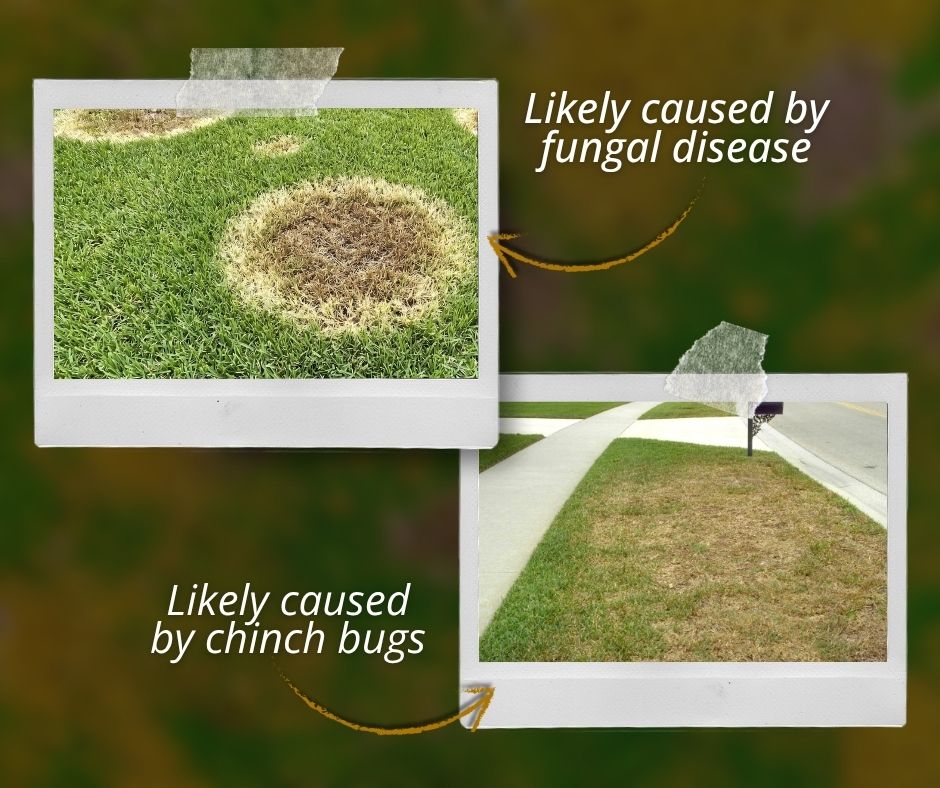
Disease often looks similar to insect damage from a distance, which is why a trained technician should confirm the cause before treating.
Environmental Causes to Rule Out
Not every brown patch is a pest. Before assuming the worst, rule out:
- Overwatering or underwatering: Florida lawns usually need about 1 inch of water per week, delivered in deeper, less frequent sessions.
- Scalping from mowing too short: St. Augustine should stay at 3.5 to 4 inches.
- Dull mower blades: Ragged cuts brown out quickly.
- Pet urine: Small, intensely brown spots with a green ring around them.
- Compacted soil: Sandy Brevard soil still compacts, especially in high-traffic areas.
- Fertilizer burn: Stripes or patches with sharp, straight edges.
Aeration helps relieve compaction and lets water and nutrients reach the roots.
How to Figure Out What’s Causing the Brown Patches
A quick diagnostic walk usually narrows things down fast.
- Check the pattern. Circular patches suggest disease. Irregular, spreading patches usually point to insects. Straight edges point to mowing or chemical issues.
- Tug the grass. If it pulls up easily with little root, think grubs or mole crickets. If it stays anchored, insects above the soil are more likely.
- Look at the blades. Ragged blades suggest sod webworms. Bleached, dry blades suggest chinch bugs. Spotted blades suggest fungal disease.
- Get down to the soil level. Part the grass in affected areas. Chinch bugs, ants, and webworm droppings are usually visible up close.
- Note the location. Damage along driveways and sidewalks often points to chinch bugs. Streaky tunneled damage points to mole crickets.
Preventing Brown Patches From Coming Back
Once your lawn is healthy, keeping it that way comes down to a consistent routine suited to Brevard County’s climate.
- Water deeply and less often, so roots grow down instead of sideways
- Mow at the right height for your turf type, and keep blades sharp
- Fertilize on a steady schedule following Florida-Friendly guidelines
- Stay on top of weeds before they crowd out healthy grass
- Aerate compacted areas to improve water and nutrient flow
- Treat for lawn pests preventively rather than waiting for visible damage
- Keep shrubs and palms healthy, since pests often move from stressed ornamentals into the turf
A bi-monthly lawn care program handles most of this and catches problems before they spread.
Related Questions to Explore
How quickly can chinch bugs destroy a Florida lawn? A heavy infestation can kill large sections of St. Augustine in just a few weeks during hot, dry weather. Catching damage early keeps the problem contained.
Will brown patches grow back on their own? Sometimes, if the cause is environmental, the root system is still alive. Pest, disease, or heavy weed damage usually needs treatment plus time to recover.
Do fire ants in the yard affect overall lawn health? Yes. Fire ant mounds kill turf underneath and disturb roots as colonies expand.
What about mosquitoes and other pests that come with lawn problems? Overgrown, damp, or weedy yards attract more than just lawn pests. Mosquitoes, fleas, ticks, and rodents all thrive where lawns are not well-maintained.
Is professional lawn care really worth it in Brevard County? For most homeowners, yes. Florida’s climate creates year-round pest and weed pressure, and most homeowners spend less on consistent service than on repeated DIY fixes.
When to Call a Professional
Some brown patches are small and fixable with a little extra water and patience. Others signal a real problem that needs proper treatment. Consider calling a Brevard County lawn care pro if:
- Brown patches are spreading fast
- You see visible insects, tunneling, or chewed grass blades
- Large sections are pulling up from the soil
- Weeds are crowding out more of the turf each season
- Fire ant mounds are popping up throughout the yard
- Shrubs, palms, and turf are all showing stress at the same time
Slug-A-Bug has protected Brevard County lawns since 1982 with lawn care services built around local grass types, local pests, and Florida-friendly practices.
Conclusion
Brown patches on a Florida lawn usually come down to one of four causes: pests, weeds, disease, or environmental stress. A careful walk around the yard, a look at the pattern and the grass blades, and a quick check at the soil line can tell you most of what you need to know. From there, the right treatment on the right schedule brings the lawn back and keeps it that way.
If brown patches keep showing up no matter what you try, the team at Slug-A-Bug is ready to take a look. Reach out for a free inspection and let us help you get back to a green, healthy yard.
