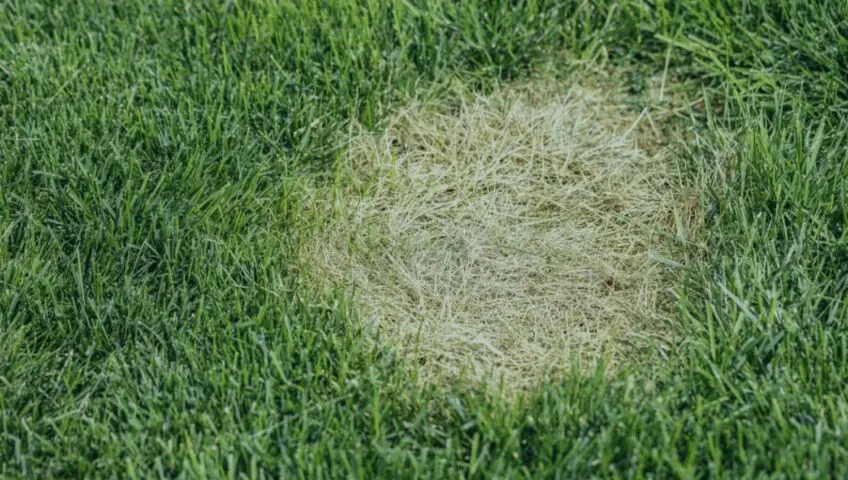
The best way to handle chinch bug control is to catch them early and treat the edges of the damage before it spreads. Chinch bugs kill grass in patches that grow outward, and once a patch turns fully brown, that grass is dead and will not bounce back from a spray alone. So the goal is simple. Spot the problem early, confirm it really is chinch bugs, treat the active edges, and fix the lawn conditions that invited them.
In Brevard County, where most yards are St. Augustine grass, chinch bugs are the number one lawn pest. Here is how to find them and stop them before your lawn pays the price.
What Are Chinch Bugs and Why Do They Wreck Florida Lawns?
Chinch bugs are tiny insects that feed on grass and slowly kill your lawn. The kind that attacks Florida lawns is the southern chinch bug, and it is the most damaging insect pest of St. Augustine grass in the state. That matters here because St. Augustine is the most common lawn grass in Florida and covers most yards in Brevard County.
A grown chinch bug is only about a fifth of an inch long, roughly the size of a grain of rice. Adults are black with white wings folded flat across the back, and they have orange legs. The young, called nymphs, are reddish-orange with a white band across the back, and they turn black as they grow up. They are easy to miss until the damage shows up and chinch bug control needs to begin.
Chinch bugs feed with a sharp, straw-like mouth. They pierce the grass, suck out the sap, and inject a toxin that blocks the plant from taking in water. The grass turns yellow, then brown, then dies. They also feed in groups. They kill one section, then crawl to the next, which is why the dead area keeps getting bigger.
What Does Chinch Bug Damage Look Like?
Chinch bug damage looks like patchy areas of yellow grass that turn brown, die, and keep spreading. It usually starts in the hottest, driest, sunniest part of the yard, and along the edges of the lawn next to driveways, sidewalks, and the road. The damage is not spread evenly across the whole lawn. It shows up in scattered spots that grow larger over a few weeks.
The tricky part is that early chinch bug damage looks a lot like plain old drought stress. A lot of homeowners respond by watering more and waiting, while the bugs keep right on spreading. Knowing the difference is the whole game.
Is It Chinch Bugs or Something Else?
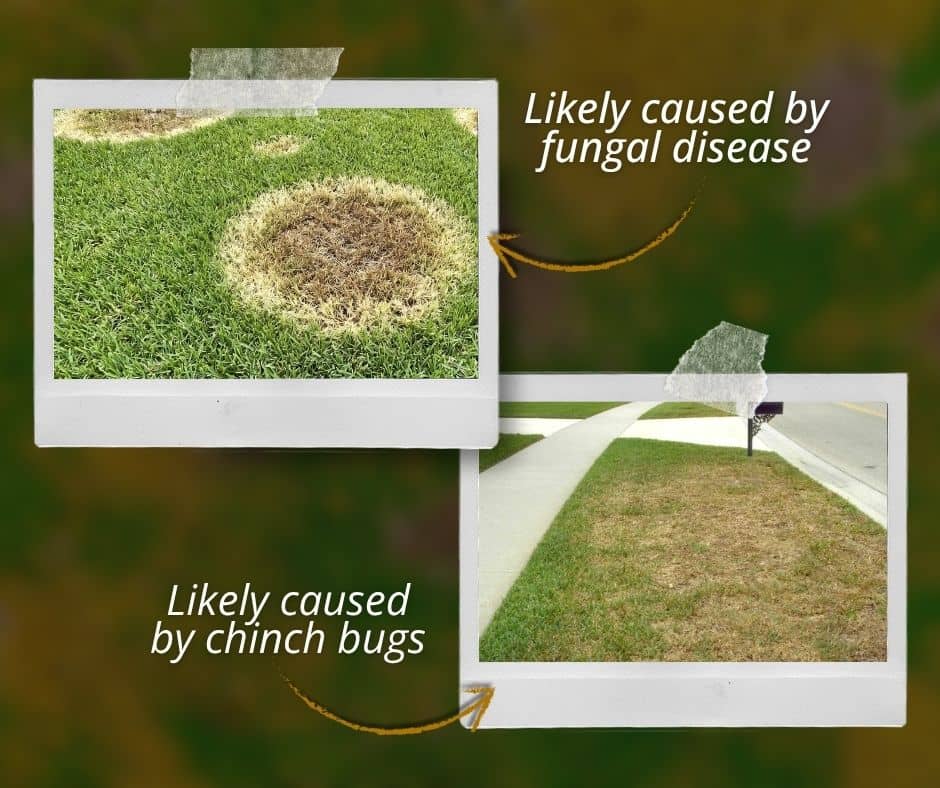
Brown patches have a few possible causes, and the fix for each one is different. Before you treat anything, rule out the look-alikes. If a brown area greens back up a few days after a good watering, it was probably just dry, not chinch bugs.
Normal seasonal color change matters too, since Florida lawns can fade and brown out during the cooler months without any pest at all. And chinch bugs are not the only thing that eats a lawn, so it helps to know the other pests that can be feeding on your turf.
Here is a quick way to tell them apart:
| Clue | Chinch bugs | Drought stress | Brown patch fungus | White grubs |
|---|---|---|---|---|
| Shape of the damage | Irregular patches that spread outward | Even blended thinning | Round circles or rings | Scattered dead spots |
| Where it starts | Sunny, dry edges by driveways and sidewalks | High spots or the whole lawn | Shady, wet, low areas | Random across the yard |
| Does watering fix it? | No | Yes, it greens back up | No | No |
| How the turf feels | Firm, roots still hold | Firm | Firm | Spongy, lifts up like loose carpet |
| Worst season | Warm months, June to September | Dry spring and fall | Cooler, wet weather | Late summer and fall |
If the damage is irregular, spreading, starting in the sunny edges, and not helped by water, chinch bugs jump to the top of the list. Time to confirm it and proceed to chinch bug control.
How to Check Your Lawn for Chinch Bugs
Before your start chicnch bug control, you can check for chinch bugs yourself in about ten minutes with the float test:
- Take a metal can or a short piece of pipe and open both ends so it makes a tube.
- Push one end two to three inches into the soil right where the green grass meets a brown patch. The live bugs sit at that green edge, not in the dead center.
- Fill the tube with water and keep it topped off for about five minutes.
- Watch the surface. Chinch bugs will float up to the top.
- If you do not see any, try three or four other spots along the damaged edge.
You can also just kneel down, part the grass at the edge of a patch, and look at the soil line for small black-and-white bugs and reddish nymphs moving fast. One heads-up. A helpful insect called the minute pirate bug looks a lot like a chinch bug, so the surest sign is finding the black adults and the red young together.
How to Address Chinch Bug Control and Keep Them Out
Chinch bug control takes two things at the same time. You have to stop the live bugs, and you have to fix the lawn conditions that let them move in. Here is what works.
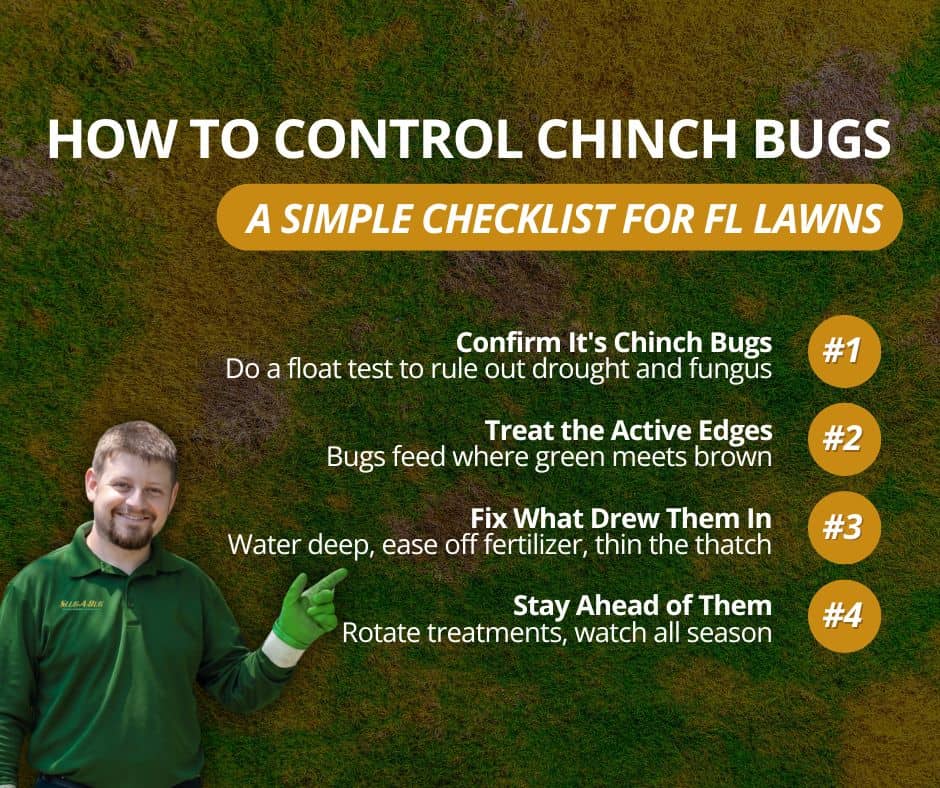
- Confirm it is really chinch bugs first. Spraying a lawn that has a fungus or a grub problem wastes money and does not fix the real issue. Run the float test before you treat anything.
- Treat the active edges, not the dead center. The living bugs are out at the green edge of the damage. Treat there and a little past it, then check the spot every few days for two weeks to make sure the spread has stopped.
- Water deep and less often. Chinch bugs love hot, dry, stressed grass. Deep, less frequent watering keeps the lawn strong and makes it far less inviting.
- Do not over-fertilize. Pushing a lawn with too much quick-release nitrogen actually makes chinch bug problems worse, not better. It also runs into Brevard’s summer fertilizer rules, which limit nitrogen during the rainy season. A steady, year-round lawn plan beats heavy feeding every time.
- Mow at the right height and keep thatch thin. Chinch bugs hide in thatch, the spongy layer of dead material between the grass and the soil. Keep that layer thin, and you take away their hiding spot.
- Rotate your treatments. This is the big one. Florida chinch bugs have built up resistance to several common bug killers, including pyrethroids and neonicotinoids, after years of the same sprays.
- Let the good bugs help. Big-eyed bugs, lady beetles, minute pirate bugs, and tiny parasite wasps all eat chinch bugs. Spraying only when you truly need to keeps these helpers alive and working for you for free.
Related Questions
How fast do chinch bugs kill a lawn? In hot, dry weather, they move fast. Because they feed in groups and crawl from one section to the next, they can turn green grass into spreading brown patches in just a few weeks.
Will my grass grow back after chinch bug damage? Lightly damaged grass can recover with treatment and good care, since St. Augustine spreads by runners. But fully brown, dead patches will not grow back and usually need to be replaced with new sod or plugs. That is why catching it early matters so much.
What time of year are chinch bugs worst in Florida? They are active in the warm months and do the most damage from about April through October, with the worst stretch in the heat of June through September.
Does watering get rid of chinch bugs? Watering alone will not get rid of them. But proper deep watering keeps grass from getting stressed and makes the lawn less attractive to them. A useful test: if a brown patch greens back up after a good watering, it was likely drought, not chinch bugs.
Can I get rid of chinch bugs myself, or do I need a professional? You can treat a small, early infestation yourself. But because Florida chinch bugs resist many common products, repeat problems are best handled by a licensed lawn care pro who rotates treatments and monitors the lawn through the season.
When to Call a Professional
Chinch bugs are one of those problems where a pro usually saves you money in the long run. Call a professional lawn care service for chinch bug control if:
- The dead patches keep spreading even after you have watered and treated.
- Have been treated before, and the bugs keep coming back, which can be a sign of resistance.
- Not sure whether you are dealing with chinch bugs, a fungus, or grubs.
- You simply want it handled right the first time.
In Florida, lawn insect treatment has to be done by a licensed applicator, and a good lawn care program does more than spray once. It watches the lawn through the warm months, rotates treatments so the bugs cannot adapt, and keeps the grass healthy enough to bounce back.
Trouble seeing the page above? Open the Lawn Care Services page.
The Bottom Line on Chinch Bug Control
Chinch bug control comes down to catching them early, confirming what you are dealing with, treating the active edges, and keeping your lawn healthy so the bugs have nothing to move into. Wait too long, and the brown patches turn into bare dirt that has to be replaced.
If your Brevard County lawn is showing spreading brown patches that water will not fix, do not guess. Slug-A-Bug has cared for local lawns for more than 40 years and knows exactly how southern chinch bugs behave in our area. Call us at 321-259-7844 or reach out online to schedule a visit, and we will help you stop the damage before it spreads.
