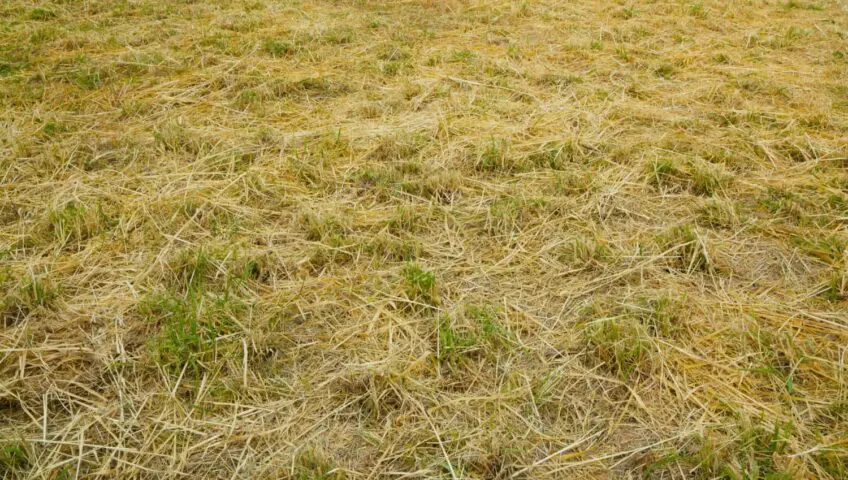
A lawn turning yellow in Florida usually comes down to one of six things: chinch bugs, a nutrient deficiency, too much water, not enough water, lawn disease, or dog urine damage. During the intense summer months, these issues hit the yard harder and spread faster.
The fix is different for each one, so the first step is figuring out which one you’re actually dealing with. Slug-A-Bug has been treating Brevard County lawns since 1982, and these are the causes we see most often when summer heat peaks.
Why Are Florida Lawns Prone to Yellowing in Summer?
Most Brevard County lawns are St. Augustine grass, and while it handles Florida’s summer heat and humidity better than most grass types, it has a few consistent seasonal vulnerabilities. Sandy soil drains nutrients quickly, especially during the heavy summer rainy season from June through September.
Extreme summer heat amplifies drought stress and pest activity at the exact same time. And because our climate never fully resets, pest populations build up rapidly by mid-summer without a hard winter kill-off to stop them.
The result: summer yellowing that shows up fast and can look the same whether the cause is bugs, drought, or a seasonal fungal problem. That’s what makes diagnosis important before you treat.
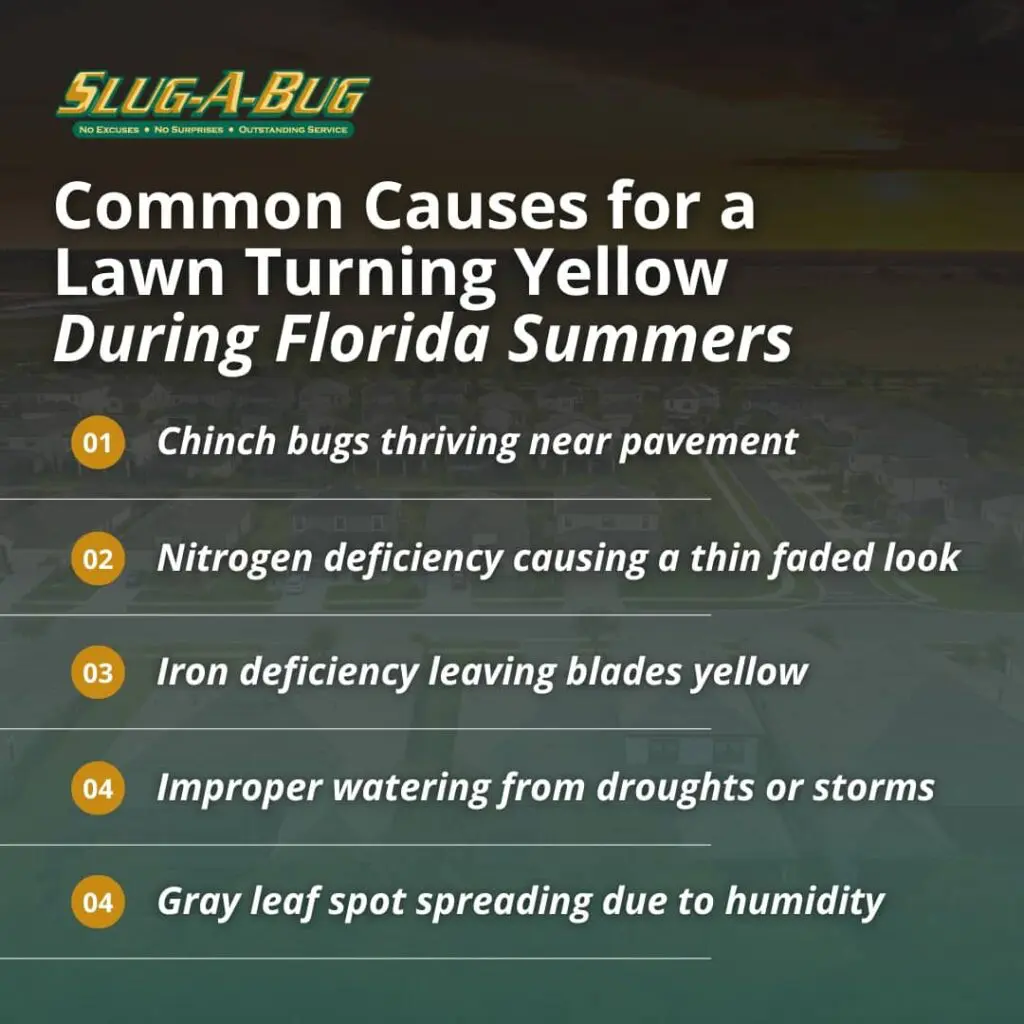
The Most Common Causes of a Yellow Lawn
While a yellowing lawn can be incredibly frustrating to look at, identifying the culprit comes down to checking specific summer symptoms. Here is a breakdown of the usual suspects, starting with the most destructive pest in the state.
Chinch Bug Damage
Chinch bugs are the absolute most common reason for a yellowing St. Augustine lawn during a Florida summer. According to the University of Florida IFAS Extension, chinch bugs cause more damage to Florida turfgrass than any other insect. They thrive in hot, dry weather, living in the thatch layer where they pierce individual grass blades and inject a toxin that blocks the plant’s ability to move water. The blades turn yellow, then crisp brown, and the damage spreads outward in irregular patches as summer progresses.
A few things to know about summer chinch bug damage:
- It usually starts in the sunniest, hottest parts of the lawn, often near driveways or sidewalks where summer heat radiates off the pavement.
- The patches expand and merge rapidly as the population explodes in the summer breeding cycle.
- It looks nearly identical to summer drought damage, which is why people often water more and accidentally make other problems worse.
- Peak activity runs from March through November in Brevard County, with the worst damage occurring in mid-to-late summer.
To check for chinch bugs: remove both ends of a coffee can, push one end about two inches into the soil at the edge of a yellow patch, fill with soapy water, and watch for five minutes. If chinch bugs are present, they’ll float to the surface. More than 15 to 20 per square foot means summer treatment is needed.
Nitrogen or Iron Deficiency
Beyond lawn pests, Florida’s sandy soil is notoriously bad at holding nutrients. Torrential summer downpours and daily afternoon storms pull nitrogen and iron out of the root zone faster than grass can absorb them, which is why deficiency yellowing tends to spike after a particularly wet stretch in July or August.
The two deficiencies look different up close:
- Nitrogen deficiency: Overall yellowing, usually starting on older blades first. The lawn looks faded and thin across a larger area rather than in isolated patches.
- Iron deficiency (chlorosis): The blade turns yellow, but the veins stay green, giving each blade a striped appearance. Most common in lawns with alkaline soil or after heavy summer rain.
A soil test is the right call before applying summer fertilizer. Adding nitrogen on top of a lawn that’s yellow from summer disease or overwatering will make the problem worse, not better.
Overwatering or Poor Drainage
Florida’s summer rainy season already delivers an immense amount of water. If your irrigation system runs on a fixed schedule that doesn’t account for summer rainfall, you’re likely severely overwatering. Overwatered roots become shallow, oxygen-starved, and unable to absorb nutrients even if they’re present in the soil.
Signs that summer overwatering is the culprit:
- Yellowing starts in low spots or areas where water pools after summer storms.
- The soil feels mushy or spongy underfoot.
- A sour or musty smell comes from the lawn after watering.
- Fungal problems like gray leaf spot start showing up in the summer humidity.
St. Augustine grass needs about one inch of water per week. Water deeply and infrequently, ideally in the early morning, and turn off your irrigation system during rainy summer weeks.
Underwatering and Heat Stress
On the other side: not enough water causes yellowing too, especially during dry summer stretches between Brevard County’s afternoon storms. Summer heat stress is worse near concrete, asphalt, or south-facing exposures where seasonal temperatures run highest.
Drought-stressed grass tends to yellow uniformly rather than in the irregular expanding patches you see from chinch bugs. If you’ve been light on irrigation and the yellow shows up evenly across open sun areas during a dry summer spell, heat stress is the likely cause.
Lawn Disease: Gray Leaf Spot
Gray leaf spot is a fungal disease common on St. Augustine grass, and Florida’s warm, wet summers create absolute prime conditions for it. It spreads rapidly during periods of high summer humidity and frequent rain, especially when lawns are overwatered or irrigated in the evening.
Early symptoms include small brownish lesions on grass blades that enlarge, elongate, and turn gray. Heavily infected leaves go yellow, then brown, usually starting at the blade tip. The disease moves incredibly fast during prolonged wet summer weather.
A few things accelerate gray leaf spot in summer: high-nitrogen fertilizers, evening watering, and mowing immediately after a summer rain. If your lawn has started yellowing during a wet stretch and you’re seeing spots or lesions on the blades themselves, summer disease is the more likely cause than a nutrient issue.
Dog Urine Spots
Dog urine contains urea, a concentrated form of nitrogen. When a dog consistently uses the same area, the intense summer sun combined with the nitrogen overload essentially burns the grass, creating small, defined yellow or brown spots surrounded by a ring of darker green grass where the diluted nitrogen acted like a fertilizer.
The pattern is what gives it away: isolated circular spots, usually in the same parts of the yard where your dog goes most often. The surrounding green ring is the key visual tell.
Rinsing the area with water immediately after the dog urinates is the most effective prevention, especially in summer when the grass is already under heat stress. For existing spots, diluting the area with heavy watering can help the grass recover over several weeks.
How to Figure Out What’s Causing the Yellow This Summer
Before you treat anything, take five minutes to read the pattern of your lawn:
|
Pattern |
Most Likely Cause |
|
Irregular expanding patches near the pavement |
Chinch bugs |
|
Overall faded yellow, older blades first |
Nitrogen deficiency |
|
Yellow blades with green veins |
Iron deficiency |
|
Yellow in low spots, mushy soil |
Overwatering |
|
Even yellowing in full sun, dry soil |
Heat stress or drought |
|
Yellow with gray lesions on blades |
Gray leaf spot |
Small circular spots, with a green ring around them |
Dog urine |
If you’ve looked at the pattern and still can’t pin it down, or the summer yellowing is spreading fast, it’s worth a professional assessment before spending money on the wrong treatment.
Our post on turf-damaging insects in Florida lawns covers how grubs and sod webworms can also create summer yellowing that’s easy to misdiagnose.
Related Questions to Explore
Why is my St. Augustine grass turning yellow in summer? St. Augustine grass yellows most often in summer from chinch bug damage, iron deficiency, or overwatering. Summer heat drives chinch bug activity near hot pavement, creating expanding yellow patches. Heavy summer rains leach iron from the soil, causing yellow blades with green veins. Overwatering from summer storms creates mushy, yellow low spots.
Can overwatering cause yellow grass during the summer? Yes, and it’s incredibly common during Florida’s summer rainy season. Overwatered roots become oxygen-starved and struggle to absorb nutrients, which causes the grass to yellow even when fertilizer is present. If you keep your irrigation running on a fixed schedule while afternoon summer storms are active, you are likely overwatering.
How do I know if I have summer chinch bugs? The most reliable field test is the soap flush: remove both ends of a coffee can, push it a few inches into the soil at the edge of a yellow patch, fill it with soapy water, and watch for five minutes. Summer chinch bugs will float to the surface. Look for small black insects with white wings, about the size of a sesame seed, moving near the thatch layer.
What does a nitrogen deficiency look like in summer grass? Nitrogen deficiency shows up as a general fading or yellowing across the entire lawn, starting with the older, lower blades first. It tends to spike in summer after heavy downpours wash nutrients out of sandy soil. The whole lawn looks thin and pale rather than showing defined spots. A soil test confirms it.
Will yellow summer grass turn green again? It depends on the cause. Yellowing from nutrient deficiency, drought, or mild overwatering usually recovers once the underlying issue is corrected. Summer chinch bug damage and advanced fungal diseases require targeted treatment before recovery can begin. Grass that has turned brown and crunchy from severe summer heat may be dead and require replacement.
When to Call a Professional
DIY fixes work well when you’ve correctly identified the cause and caught it early. Call a professional this summer when:
- The yellowing is spreading faster than you can diagnose it in the summer heat.
- You’ve treated for chinch bugs or disease, and the problem keeps coming back.
- Your lawn shows multiple symptoms at once (patches, lesions, and nutrient signs together point to a compounding summer problem).
- You can’t identify the pattern and keep applying the wrong seasonal treatments.
- The affected area is large enough that individual spot-treatment isn’t practical.
Slug-A-Bug’s lawn care program services Brevard County lawns every two months, covering insect control, weed pressure, and summer fertilization in a single visit. If your lawn is showing stress signs between scheduled summer treatments, we come back at no extra charge.

Conclusion
A yellow lawn in a Florida summer isn’t just one problem. It’s six different problems that all look similar from a distance. The short version of what to check:
- Irregular expanding patches near concrete: likely chinch bugs
- Overall pale, faded look: likely nitrogen or iron deficiency
- Yellowing in wet, low spots: likely overwatering from summer storms
- Even yellowing in dry, sunny areas: likely heat stress
- Spotted or lesioned blades: likely gray leaf spot from summer humidity
- Small round spots with green rings: likely dog urine
Get the diagnosis right before you treat, and you’ll fix it faster. If you’re not sure what you’re looking at, Slug-A-Bug is here to help Brevard County homeowners get their lawn back under control.
