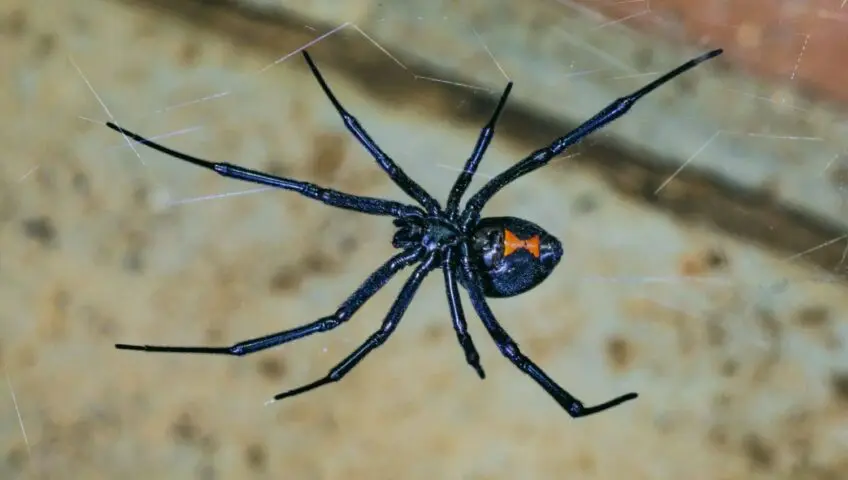
Yes, black widow spiders live throughout Florida, and their venom is the most potent of any spider in North America. But a real risk is not the same as a deadly one. Bites are uncommon, serious reactions are rarer still, and these shy spiders would almost always rather flee than fight.
At Slug-A-Bug, we have handled spider calls across Brevard County for more than 40 years, and the truth is far less frightening than the reputation. This guide covers which widow species you can actually run into here, how to tell a black widow from its look-alikes, how worried you should be about a bite, and how to keep them off your property.
Do Black Widow Spiders Live in Florida?
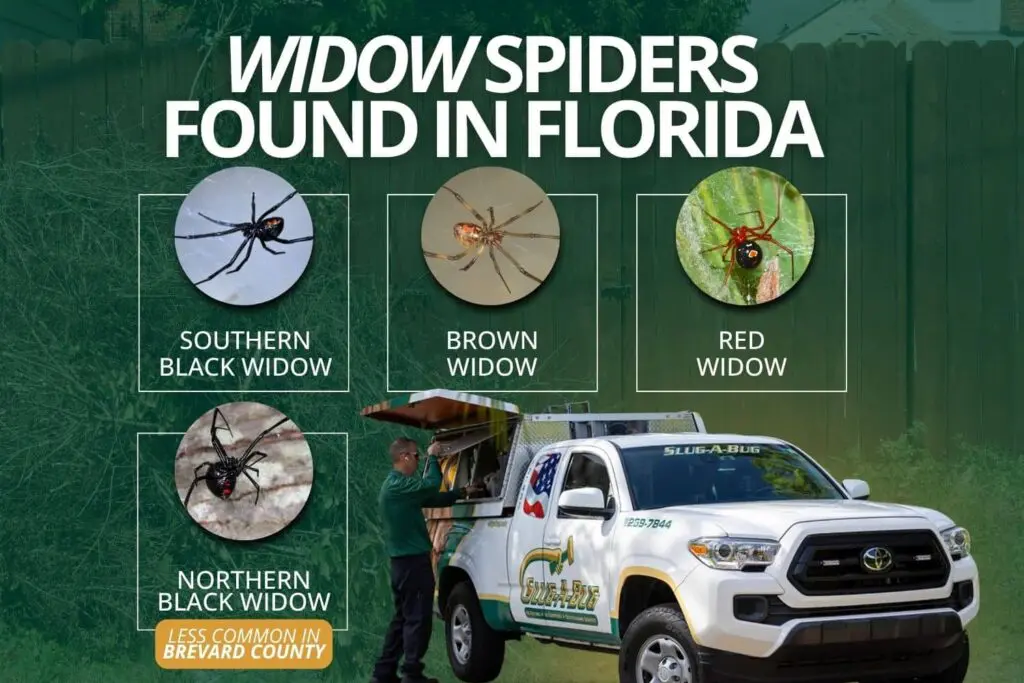
Yes. Black widows live in every part of Florida, including right here on the Space Coast. In fact, Florida has more widow species than most states. According to the Florida Department of Agriculture, four widow species call the state home:
- Southern black widow (Latrodectus mactans), the classic shiny-black, red-hourglass spider found statewide. This is the one you are most likely to meet.
- Northern black widow (Latrodectus variolus), less common and more often seen in north Florida, with an hourglass that is often broken into two separate marks.
- Red widow (Latrodectus bishopi), found only in Florida’s sand pine scrub. It is rare, lives far from homes, and is a protected species, so you are very unlikely to see one.
- Brown widow (Latrodectus geometricus), now the widow that most people actually find around their homes in Florida.
So the honest answer is that widow spiders are common here, but the one with the fearsome reputation, the southern black widow, tends to stay outdoors and out of sight.
How to Identify a Black Widow and Its Look-Alikes
A black widow is a shiny, jet-black spider with a bright red hourglass on the underside of its round belly. It hangs upside down in a messy, tangled web built low to the ground, which is how you usually spot the red mark. A female is about an inch and a half across with her legs out. Per the University of Florida, the southern black widow builds a tough, irregular web in protected spots and is seldom found inside Florida houses.
The spider people most often mistake for a black widow is the brown widow. Here is the fastest way to tell them apart, and the egg sac is the giveaway.
| Feature | Black widow | Brown widow | Red widow |
|---|---|---|---|
| Body color | Shiny jet black | Tan to dark brown, mottled | Reddish-orange legs and head, dark belly |
| Hourglass | Bright red, underside | Orange to yellow, underside | Often broken or missing |
| Egg sac | Smooth, white, round | Spiky, tufted, like a tiny sea urchin | Rarely seen near homes |
| Where you find it | Low, dark, undisturbed outdoor spots | Mailboxes, eaves, patio furniture | Sand pine scrub only |
If you find a spiky, fuzzy-looking egg sac, you are looking at a brown widow, not a black widow. Brown widow venom is actually stronger drop for drop, but the spider is timid and injects very little, so it is considered less of a threat. If you are trying to sort out a brown spider you found, this guide on telling various brown spiders apart covers the same ID logic, and our own roundup of other common Florida spiders shows the harmless ones you are far more likely to see.
How Dangerous Is a Black Widow Bite?
A black widow bite is serious but very rarely deadly. The venom contains a neurotoxin called alpha-latrotoxin, which can overload the nervous system and cause real pain. Even so, deaths are extremely rare in the United States, especially with modern medical care and available antivenom. The danger is genuine, but the panic is usually not.
Black widows are not aggressive. They do not chase people, and they will not bite unless they feel trapped. Most bites happen by accident when someone presses against a hidden spider, like reaching into a cluttered garage, pulling on a work glove, or moving a stack of firewood. The black widow and the brown recluse are the two spiders worth taking seriously, and a black widow will almost always retreat if it has the chance.
If a bite does happen, symptoms usually appear within 20 to 60 minutes:
- Dull, spreading muscle pain and cramping
- Sweating, nausea, or stomach pain
- A small red mark or slight swelling at the bite
Children, older adults, and anyone with a weakened immune system can react more strongly, so they should get medical care quickly.
What to Do If You Are Bitten
Stay calm and get medical advice. Most black widow bites are treatable, and panicking makes the symptoms feel worse. Take these steps:
- Wash the bite area with soap and water.
- Apply a cool, damp cloth to ease pain and swelling.
- Call the Florida Poison Information Center at 1-800-222-1222, or see a doctor, especially for a child or older adult.
- Try to safely photograph the spider so it can be identified. Do not try to catch it.
Skip the old first-aid myths. Do not cut the bite, try to suck out venom, or apply a tourniquet. None of those helps, and they can make things worse.
Where They Hide and How to Keep Them Out
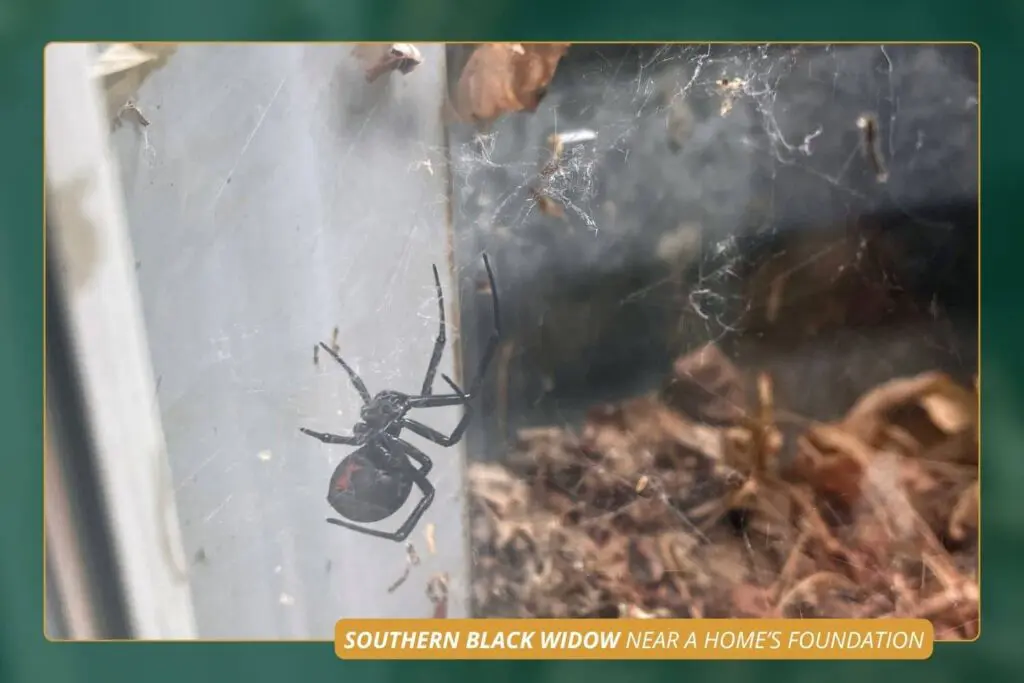
Black widows like quiet, dark, low spots that rarely get disturbed. Outdoors, that means woodpiles, rock piles, water meters and sprinkler boxes, block walls, and the undersides of patio furniture and grill covers.
Indoors, they stick to garages, sheds, and storage areas rather than living spaces. Widow activity tends to climb in spring and late summer, and a Florida storm season often pushes spiders toward homes as their outdoor hiding spots get flooded or torn up, which is something we see a lot of on the Space Coast.
You can make your property far less inviting:
- Clear clutter and move woodpiles and debris away from the house.
- Vacuum up any webs and egg sacs you find, then seal and toss the bag.
- Wear gloves when reaching into storage, mulch, or dark corners.
- Seal cracks and add weather stripping around windows and doors.
- Swap white exterior bulbs for yellow ones, which attract fewer of the insects that spiders feed on.
For a full walkthrough, see our spider prevention plan. Prevention handles most of the problem, and a professional handles the rest.
Related Questions to Explore
Are black widow spiders common in Florida?
Yes, widow spiders are common across Florida, but the dangerous southern black widow usually stays outdoors in undisturbed spots and is seldom found inside homes. The brown widow is the one people most often see around the house.
Where are black widows found in Florida?
Black widows live statewide, favoring quiet outdoor areas close to the ground. Look for them in woodpiles, water meter boxes, sheds, garages, and under patio furniture, not in the open or in high-traffic rooms.
What spider looks like a black widow but isn’t?
The brown widow is the most common look-alike. It has a tan or brown mottled body, an orange hourglass instead of a bright red one, and a spiky egg sac instead of a smooth round one. Several harmless Florida spiders also get mistaken for widows.
Are black widows the most dangerous spider in Florida?
The southern black widow has the most potent venom of any spider in North America, so by venom strength, yes. But “most venomous” does not mean most harmful in daily life, because black widows are shy and bites are rare. Brown widows and the rare red widow are venomous, too, just at a lower risk.
Do black widows come inside the house?
Rarely. Southern black widows prefer outdoor and semi-enclosed spaces like garages and sheds. They can be carried inside in boxes, firewood, or stored furniture, but they do not seek out living spaces the way some household pests do.
When to Call a Professional
If you are finding widow webs around your home, spotting egg sacs, or simply do not want to gamble with a venomous spider near kids or pets, that is the time to bring in a pro. Reach out to Slug-A-Bug if any of these sound familiar:
- You have seen more than one widow or several messy, low webs around the property.
- You keep finding spiders in the garage, shed, or under outdoor furniture.
- You have young children, older family members, or pets who spend time where the spiders are.
- You want ongoing protection instead of dealing with each spider one at a time.
As the largest independently owned pest management company in Brevard County, we have protected local homes for over 40 years. Our pest control service targets widow spiders and the conditions that attract them, so they do not keep coming back.

Conclusion
Black widow spiders in Florida are a real presence, but they are a manageable one. The key takeaways:
- Florida has four widow species, and the brown widow, not the black widow, is the one you will most likely see around the house.
- The bite is venomous but rarely dangerous, and these spiders only bite when trapped.
- Decluttering, sealing up, and regular treatment keep widows away from your living spaces.
If widow spiders have you uneasy, contact Slug-A-Bug and let our team handle it.
