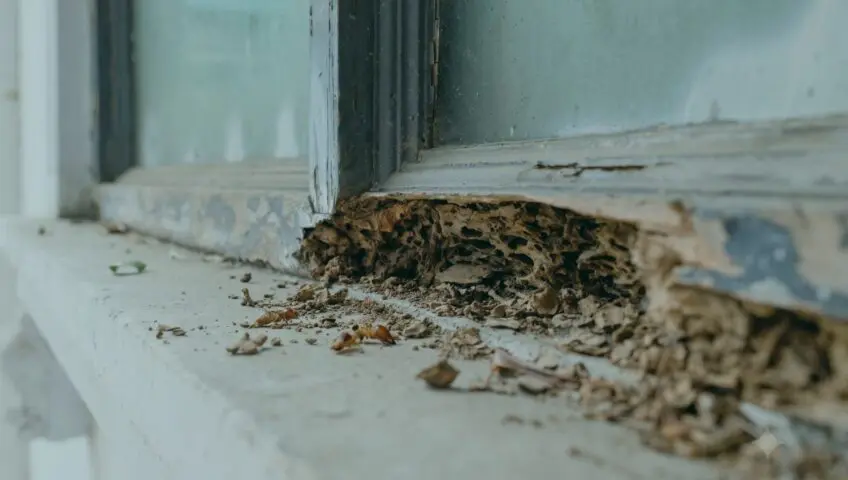
Drywood termites are a common termite that lives its entire life inside dry, sound wood, with no soil, no standing water, and no mud tubes required. That is exactly what makes them such a problem for Florida homes. They can infest attic beams, wall framing, hardwood floors, and even furniture, and stay hidden for years before you notice a sign.
In Brevard County’s warm, humid climate, they stay active year-round. This guide covers how to recognize a drywood termite problem, how it differs from the subterranean termites people usually picture, the damage they do, and how an infestation is treated.
What Is a Drywood Termite?
A drywood termite is a wood-dwelling termite that needs no contact with soil or standing water.
Unlike the subterranean termites most people know, drywood termites live entirely inside the wood they eat, pulling the moisture they need from the wood itself and from Florida’s humid air. Their colonies are smaller and slower-growing than subterranean colonies. But because they nest deep inside beams, framing, and furniture, they are easy to overlook.
Florida is prime territory. According to UF/IFAS, the West Indian drywood termite (Cryptotermes brevis) is the most economically significant drywood termite in the state, once nicknamed the “furniture termite” for how often it turns up in wooden furnishings.
You usually only see the termites themselves when they swarm. On warm, humid evenings, mature colonies release winged reproductives called alates that fly out, pair off, and hunt for a fresh piece of wood to start the cycle again. They slip in through attic vents, gaps around eaves, and tiny cracks in unfinished or unpainted wood. Then they seal themselves inside and begin excavating.
Because each pair can start its own colony, a single home can end up hosting several separate infestations over the years, each hidden in a different beam, door frame, or wall.
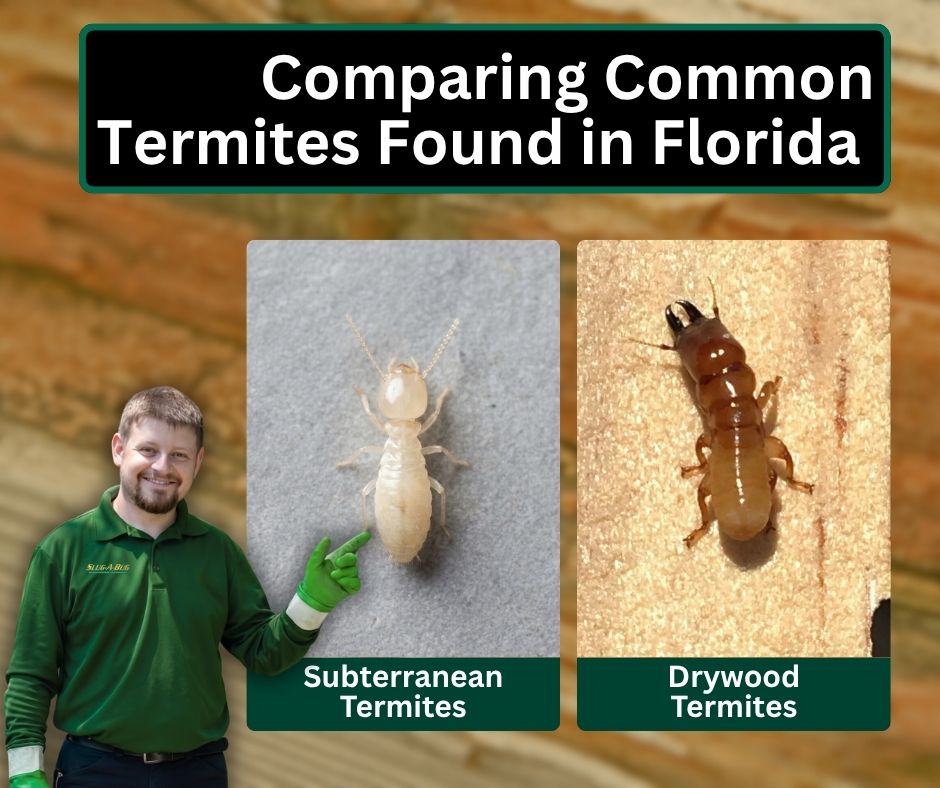
Drywood vs. Subterranean Termites
The biggest question homeowners have is which termite they are dealing with, because the treatment is completely different. Here is how they compare:
| Factor | Drywood Termites | Subterranean Termites |
|---|---|---|
| Where they live | Inside dry, sound wood | Underground, in the soil |
| Soil contact | Not needed | Required |
| Telltale sign | Frass (fecal pellets) and kick-out holes | Mud tubes on walls and foundations |
| Moisture source | The wood and humid air | Soil moisture |
| Common targets | Attic beams, framing, furniture, floors | Foundation, sill plates, ground-level wood |
| Treatment | Spot treatment or whole-structure fumigation | Soil termiticide barriers or bait systems |
Both are common in Florida, and a home can even have both at once. Correctly identifying the species is the whole ballgame, since a treatment that works on one may do nothing to the other.
Signs of a Drywood Termite Infestation
Because drywood termites hide inside wood, you usually spot the evidence before the insects. Watch for:
- Frass (fecal pellets): tiny, hard, six-sided pellets about the size of a grain of salt, tan to reddish, often in small piles that look like sawdust or coffee grounds below the wood.
- Kick-out holes: pin-sized holes the termites push frass out of, usually with a little pile beneath.
- Discarded wings: small, equal-length wings on windowsills, countertops, or caught in spider webs after a swarm.
- Hollow or blistered wood: wood that sounds hollow or dull when tapped, or a surface that looks bubbled or rippled.
- Swarmers: winged termites near windows and lights, especially in the warmer months.
Any of these is worth a professional inspection, since what you can see is usually a fraction of what is inside the wood.
The Damage Drywood Termites Cause
Drywood termites hollow out wood from the inside, weakening structural framing while leaving the surface looking intact. They carve smooth galleries across and along the grain, and because the colony is cryptic and slow, a home can be infested for years before anyone notices.
Compared with subterranean termites, drywood colonies work slowly, so damage builds over years rather than months. That is a mixed blessing: you often have more time to catch them, but because the galleries are sealed inside sound-looking wood, most homeowners do not realize anything is wrong until they spot frass, witness a swarm, or push on a soft window frame or floorboard.
In older Brevard County homes with exposed wood, wooden furniture, and decades of swarm seasons behind them, that slow accumulation can add up to serious structural repair. It is also worth knowing that most homeowners insurance policies do not cover termite damage, so early detection saves real money.
How Are Drywood Termites Treated?
Treatment depends on how widespread the infestation is. For a small, localized colony confined to accessible wood, a professional may use spot or local treatment, injecting the galleries directly.
For infestations that are widespread or spread through hidden areas of the structure, whole-structure fumigation (tenting) is often the reliable choice, since it reaches every gallery at once.
Fumigation seals the home under a tent and fills it with a gas that penetrates every piece of wood, which is why it works on infestations you cannot fully see. It also takes preparation: arranging to be out of the home for a day or two, and bagging or removing certain foods and medications.
Localized options such as targeted injection can spare you the tent when the infestation is genuinely confined, which is exactly why an accurate inspection comes first, to confirm how far the termites have actually spread.
This is not a DIY job. In Florida, termite and fumigation work must be performed by licensed operators, and misdiagnosing the species or the extent of the problem only gives the colony more time to do damage. A professional termite treatment starts with an inspection to confirm the species, map the galleries, and match the method to the problem.
How to Prevent Drywood Termites
You cannot fully DIY your way out of a Florida termite risk, but you can make your home a harder target:
- Seal and paint bare wood. Drywood termites enter through cracks and unfinished surfaces, so a solid coat of paint and sealed crevices close the door.
- Use treated wood for new construction or repairs wherever possible.
- Clear wood off the ground. Firewood, lumber, and scrap piles against the house are staging areas.
- Screen attic and soffit vents, since swarmers fly in through small openings.
- Schedule annual termite inspections. A yearly check catches an infestation while it is small, which is the difference between a spot treatment and a tent.
Related Questions
What does drywood termite frass look like?
Small, hard, six-sided pellets, tan to reddish, that pile up like sawdust or coffee grounds. They collect below kick-out holes in the wood and are one of the clearest signs of an active drywood infestation.
How do I know if I have drywood termites?
Look for frass piles, pin-sized kick-out holes, discarded wings on sills, and hollow-sounding wood. Swarming winged termites near windows and lights are another strong sign. Any of these warrants a professional inspection.
Do drywood termites always require tenting?
No. A small, localized infestation can often be spot-treated. Whole-structure fumigation (tenting) is used when the infestation is widespread or spread through hidden parts of the home, where it reaches every gallery at once.
Are drywood termites common in Florida?
Yes, they are widespread across the state, especially in coastal and southern areas. Florida’s warmth and humidity let them stay active year-round, which is why routine inspections matter more here than in cooler climates.
What’s the difference between drywood and subterranean termites?
Subterranean termites live in the soil and build mud tubes; drywood termites live inside dry wood and leave frass. They require different treatments, so identifying the right one is essential.
When to Call a Professional
If you have found frass, wings, or hollow wood, the infestation is already established, and off-the-shelf products will not reach the colony inside the wood.
Slug-A-Bug has protected Brevard County homes for over 40 years, and our licensed team can confirm whether you are dealing with drywood or subterranean termites, locate the galleries, and treat the infestation with the right method the first time.
Explore our termite treatments or the rest of our pest control services to see how we protect Florida homes.
Found the signs? Contact Slug-A-Bug for a professional termite inspection.
The Bottom Line
Drywood termites are easy to miss and expensive to ignore. They live inside dry wood with no soil contact, which is exactly why Florida homes, full of warm, dry framing and humid air, make such good targets. Remember:
- Frass, kick-out holes, discarded wings, and hollow wood are your early warning signs.
- Drywood and subterranean termites need different treatments, so identification comes first.
- Caught early, a drywood problem may need only spot treatment; caught late, it may need a tent.
Schedule a visit with Slug-A-Bug before the damage adds up.
